Thank you for reaching out. We’ve received your details. We’ve received your details. We’ll reply within 48 hours. If you asked to book, you’ll get a payment link to hold your spot.
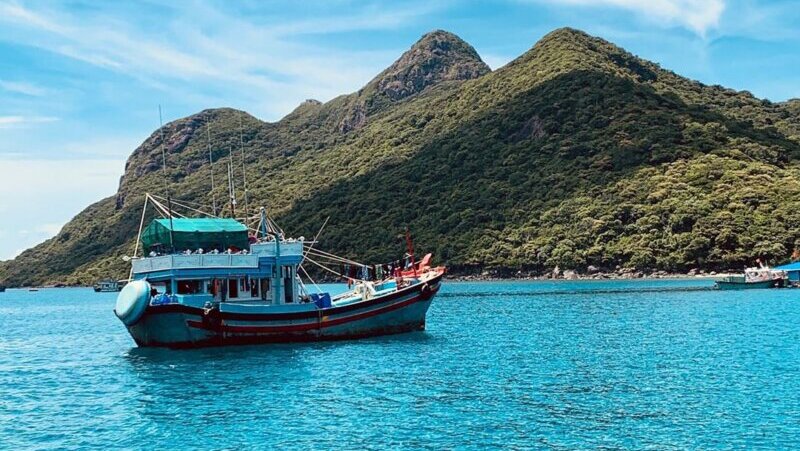
The Con Dao archipelago comprises 16 islands and islets, with Con Son serving as the main island and vibrant hub. Following administrative restructuring in July 2025, Con Dao is officially designated as a special administrative zone under Ho Chi Minh City (formerly under Ba Ria–Vung Tau province).
Alongside these regional updates, a modern, eco-friendly electric bus network has been introduced on Con Son to serve both local residents and travelers. Here is your complete guide to navigating the island effortlessly using Con Dao’s green public transit system.
1. What does the Con Dao bus look like?
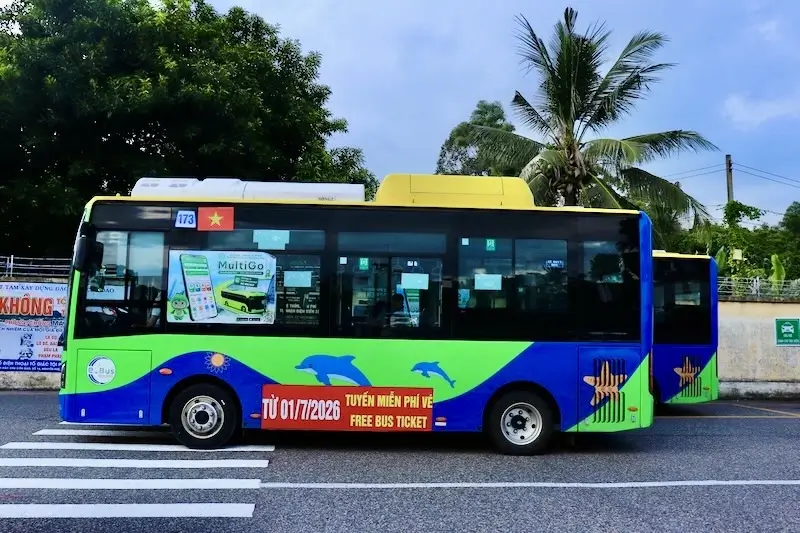
Unlike traditional municipal transit, the Con Son electric bus is a sleek, single-decker green 40-seater vehicle. Keep an eye out for Bus #173—this is currently the primary public electric bus operating across the island.
Con Dao local bus is a sleek, electric single decker 40 seater vehicle
2. Con Dao Electric bus: Route, schedule & travel time
The bus operates continuously back and forth between Con Dao Market (in the town center) and Co Ong Airport, departing every 15 minutes from 5:00 AM to 7:00 PM daily. A complete one-way trip takes approximately 30 minutes.
The scenic journey takes you along Ton Duc Thang Street—one of Con Son’s most striking coastal roads—and makes stops near famous sights, including Dam Trau Beach (recognized by Travel + Leisure as one of the world’s most stunning beaches). You can also use the bus to reach nearby destinations like the Poulo Condor Boutique Resort and Dam Tre Bay.
Getting to a bus stop
If you are staying in the center of Con Dao town, there is usually a bus stop within short walking distance of your accommodation. If your hotel is located further out, you can ask your hotel to arrange a transfer provided by the bus company for 10,000 VND per ride.
The 21 Bus stops along route 173
Con Dao Market (Departure point)
Con Dao Post Office
Con Dao Court
Tourist Pier
Sai Gon Con Dao Resort
The Secret Con Dao
Phu Tuong Prison
Hang Keo Cemetery
Lo Voi
Phan Chu Trinh T-junction
Dat Doc
Six Senses Con Dao
Chan Chim Cape
Tau Be Cape
Yen Spa
Con Dao Water Supply Station
Madam Phi Yen Temple
Uncle Temple
Dam Trau Beach
Van Hoa Community No. 1
Co Ong Airport (Ending point)
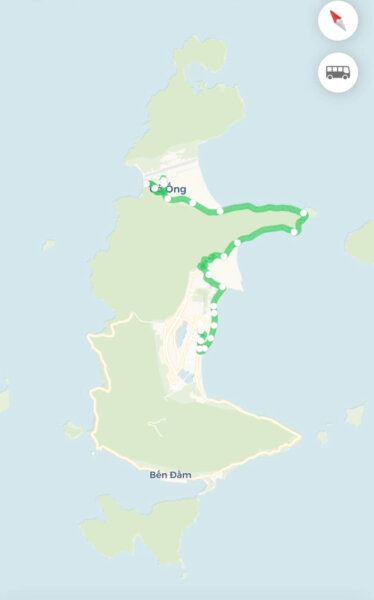
The route of Con Dao bus
The return bus route follows the exact same stops in reverse.
4. Ticketing & How to track your Con Dao bus
Remember that the bus is FREE for everyone, including locals residents and tourists alike. However, you will need a credit card/ debit card (or ID card for Vietnamese citizens) or any card with a microchip just for recording the data.
Once you step on the bus, just give the usher your card, and tell her/ him when you want to get off. She/ he will let you know when the bus arrives at your bus stop.
For Live Route Tracking: Download the Multi-Go app on your mobile device. Select Route 173 (Con Dao bus) to check real-time arrival schedules, track the bus location live on the map, and plan your stops accordingly.
MultiGo App
Conclusion
Taking the electric bus is not only an eco-conscious and budget-friendly way to travel across Con Son, but it also offers front-row seats to the island’s coastal scenery. Whether you need a smooth airport transfer or a hassle-free day of beach-hopping and historic exploration, hopping on Bus #173 is the best way to slow down and experience Con Dao like a local.
—
If you are planning your trip to Con Dao, don’t forget to truly immerse yourself in the natural wonders and heritage of Con Dao, explore these curated local experiences by Endless Vietnam:
Step back in time on a guided journey through Con Dao’s historic landmarks and French/American-era heritage sites, choosing your preferred pace on two or four wheels.
An unforgettable overnight conservation experience on Bảy Cạnh Island to witness mother sea turtles nesting under the stars in their natural sanctuary.
And many other nature treks are waiting for you ahead.
Got questions? Feel free to reach out to Endless Vietnam—we’d love to help you design your unforgettable journey!
A COMPARISON OF PHONG NHA 1-DAY ADVENTURE TOURS
Nicknamed the Kingdom of Caves and a haven for thrill-seekers, Phong Nha – Ke Bang National Park offers more than 400 discovered caves and spans over 123,000 hectares of dense jungle. It’s an untamed paradise for nature lovers and adventure enthusiasts alike.
But before you strap on your hiking boots—note this: trekking independently through the jungle is not allowed (except for the Phong Nha Botanic Garden). To truly explore the caves and forest trails of Phong Nha, you must join a guided tour with a licensed local operator.
In this guide, Endless Vietnam make a comparison of the most popular 1-day adventure tours in Phong Nha, helping you choose the one that best fits your interests, fitness level, and travel schedule.
Easy trails trekking, some rocky sections, ladder climbing, underground river swimming
Moderate trekking, Caving (1,5km), rocky terrain
Rocky terrain, jungle trails, cave river, ladders in the cave
Jungle trails, rocky parts before the cave, river crossing, short hill
Boulderig Rocky cave, dark river
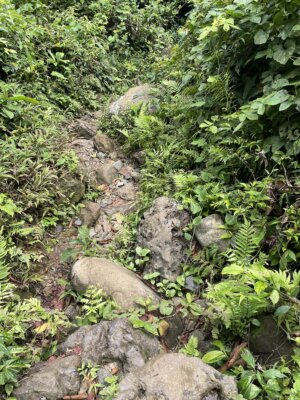
Walking on rocky boulders and uneven and slippery ground
Some scrambling over rocks.
Trekking in the jungle, exploring E cave by SUP (2-3km)
What to see
Rat Cave, Hung Ton Cave, To Mo valley
Hang Tien Cave
Ruc Mon Cave
Elephant cave, Mada Valley, Tra Ang Cave
Phong Nha cave
Paradise cave
Dark cave (Back entrance), E cave, Abandoned valley
Swimming
150m
River crossing, swimming is optional
Optional
600m (Optional)
Optional
Optional
Elevation
120m
150m
80m
60m
150m (estimated)
325.5m
Group size
Max 12 pax
(Strictly)
Max 12 pax
(Strictly)
Max 20 pax
Max 16
N/A
Max 10
Max 15
Start-End
7am – 7pm
7am – 7pm
7:30am-6:30pm
8am-5:30pm
8am-3:30pm
7:30am-5pm
8am-5:30pm
Shoe sizes
36-44
36-44
37-47
37-45
38-43
38-43
36-43
Transfer time from your hotel to the trekking point
1.5 hour
1.5hour
1.5hour
1 hour
15 mins
[Pick-up not included]
30 mins
Cancellation policy
Non-refund within 7 days before tour departure
Non-refund within 7 days before tour departure
50% refund within 7 days before tour. OR reschedule the tour within 7 days.
100% refund at least 3 days before tour.
50% refund within 3 days before tour.
No refund within 24 hours before tour.
Flexible. However, remember to notice the tour operator as early as you can for their logistic operation.
20% will be charged if you cancel in the morning of the tour date.
300,000VND will be charged if you cancel 2 hours before the tour departure.
(Notes: Difficulty and elevation are estimated based on personal trekking experience and data provided by the tour operators.)
Adventure in the jungle: What to expect
All of these tours immerse you in the untouched jungle, leading to breathtaking caves that leave even seasoned travelers in awe. Expect to get muddy, sweaty, and soaked—but in the best possible way. These aren’t just tours; they’re invitations to connect deeply with nature.
Gear tip: Most operators provide army shoes or sandals for trekking. However, sizes may be limited and they might not suit your comfort. Bring your own sturdy shoes if possible—and thick socks if you must use provided footwear to avoid blisters.
Swimming? Yes! Several tours involve cave swimming or river crossings. Even if you’re a good swimmer, life jackets are mandatory and supplied by the operators for safety.
E cave
Picnic lunch at the E cave tour
Trekking path in Abandoned valley
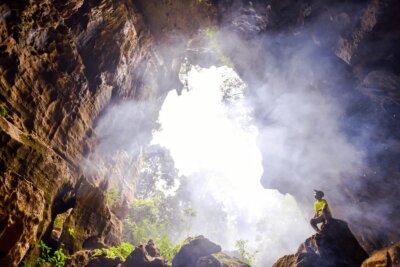
Back entrance of Dark cave
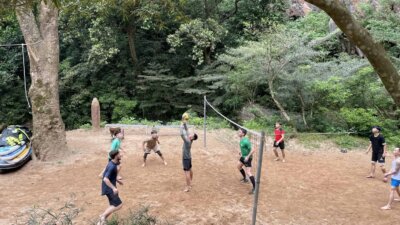
Volleyball at the campsite
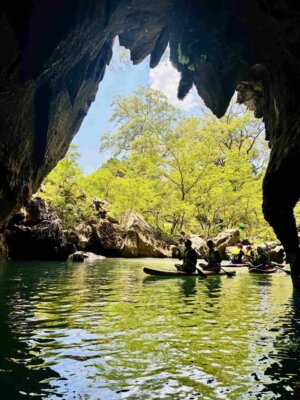
Paddling SUP at E Cave
Safety first: Our top pick
For a first-time visitor or cautious adventurer, Oxalis Adventure stands out for its top-tier safety standards. Their guides and porters are highly trained, both physically and in emergency response. A trip with Oxalis is more than safe—it’s professionally managed and deeply memorable.
Planning a family trip? Oxalis also offers family-friendly tours suitable for children and teens.
If you’re looking for wilder terrain or a unique experience, tours like Abandoned Valley or Ruc Mon can challenge and reward more energetic explorers.
Phong Nha is not just a place you visit—it’s a place you feel. Whether you’re swimming through an underground river, climbing jagged rocks, or quietly gazing at ancient cave formations, Phong Nha’s adventures leave a lasting imprint.
So why not stay a few extra days? Explore. Immerse. Respect. Adventure.
Got questions? Feel free to reach out to Endless Vietnam—we’d love to help you design your unforgettable journey!
A GUIDE TO KAYAKING AND SUP IN PHONG NHA
Being famous for the largest natural cave on Earth, together with a collection of other mind-blowing caverns and pristine primeval jungles, Phong Nha-Ke Bang National Park is widely celebrated as the destination for adventure-seekers.
Yet, the magic of this region extends far beyond its underground wonders. Thanks to its unique geological formations, Phong Nha is blessed with a stunning, interconnected network of emerald rivers, turquoise springs, and serene lakes—all beautifully framed by towering, ancient limestone system This spectacular landscape makes the region an absolute paradise for water-based activities, such as kayaking and Stand-Up Paddleboarding (SUP).
In this article, Endless Vietnam provides a comprehensive guide to the best kayaking and SUP experiences in Phong Nha.
1. Best Places to Kayak & SUP in Phong Nha
1.1. Dark Cave
For thrill-seekers, Dark Cave is the hub for dynamic, high-energy water activities. A full expedition here starts with an exhilarating zipline over the Chay River, followed by a fun, unique mud bath deep inside the dark cave, and kayaking along the turquoise river.
However, if a muddy bath is not what you are looking for, you can opt for alternative activity packages, including:
Zipline + Kayaking (250,000VND/ person)
Kayaking + Water Activities (150,000VND/ person)
No matter which package you choose, all options grant you the chance to kayak or SUP along the refreshing, turquoise water at the Chay river.
Right next to Dark Cave along the scenic Chay River, Hava Valley is a vibrant eco-tourism spot renowned for its brilliant, crystal-clear turquoise waters. It serves as the ideal location for a relaxed yet fun-filled day of paddling.
Opening Hours: 8:00 AM – 4:00PM daily
Visitors can purchase entry passes directly at the ticket counter based on two primary options:
The Full Package Ticket(Includes the 600m water zipline)
Adults: 250,000VND / person
Children (1.1m – 1.4m tall): 80,000 VND / person
Children (under 1.1m tall): Free (Must be accompanied by an adult)
Note: This package permits access to the 600m zipline once per ticket.
The Popular Ticket(Excludes the 600m zipline)
Adults: 150,000 VND / person
Children (1.1m – 1.4m tall): 80,000 VND / person
Children (under 1.1m tall): Free (Must be accompanied by an adult)
1.3. OZO Park
If you want a peaceful paddling experience that feels like stepping into a fairytale, head deep into the primary forest to Ozo Park.
“If you are traveling with kids, OZO Park is the right place.”
The water level here is not too high (mostly at knee-high level) while the current is calm and gentle, OZO Park is absolutely for your kids.
Price:200,000VND/pax(Standard entrance ticket which includes water activities).
Kids have fun with SUP at OZO Park
Beside kayaking and SUP, your entry ticket unlocks an array of unique jungle adventures:
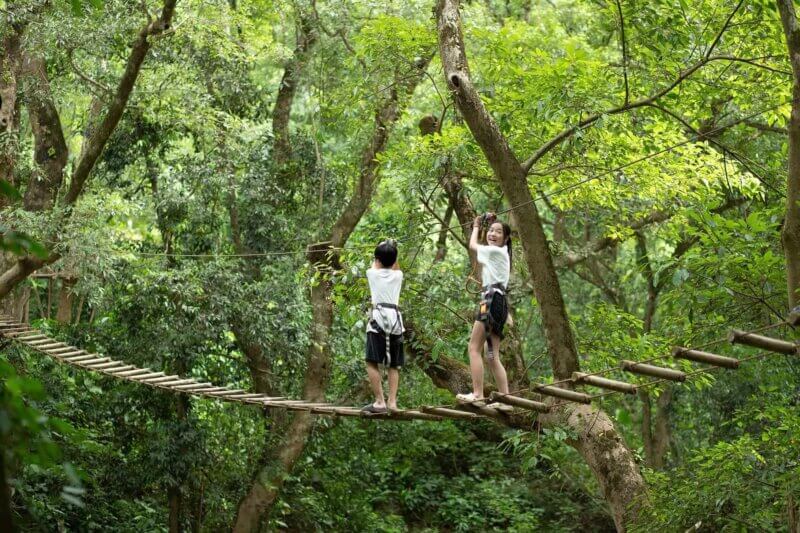
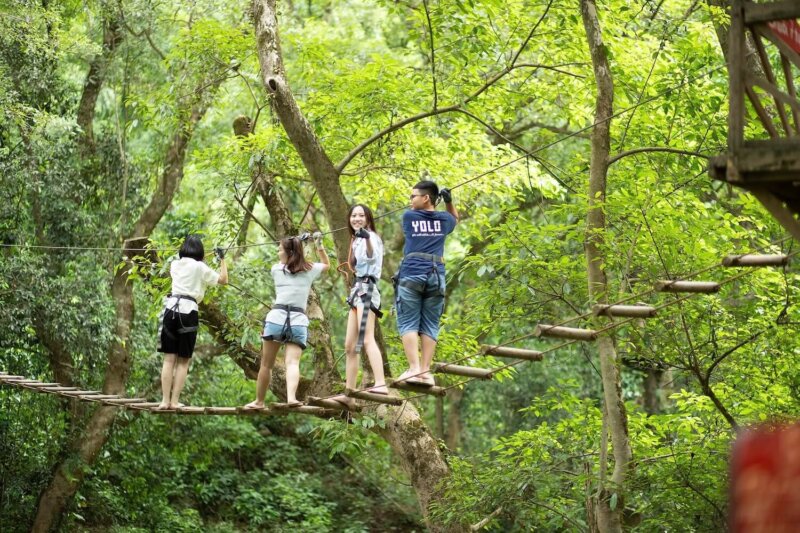
The Tree-Top Challenge: Challenge yourself the first-ever 7-circuit obstacle course built entirely in the trees (suitable for adults under 80kg and children over 1.4m).
Tarzan Zipline: “Let loose” and fly through the jungle canopy on an exhilarating zipline designed for kids, teens, and parents alike.
Game on the trees
Zipline between the trees
Family having fun with the tree games
1.4. Phong Nha Valley
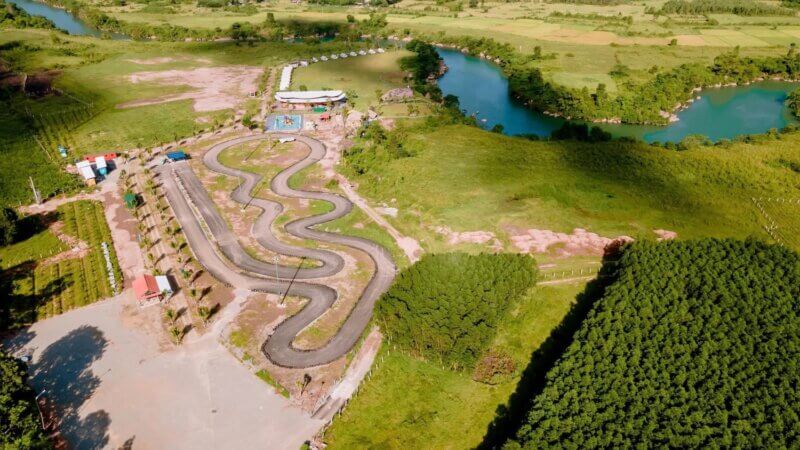
As a newly opened attraction in Phong Nha, Phong Nha Valley has quickly become a premier hotspot for glamping, go-kart racing, and water adventures. Located right along a peaceful stretch of the Chay River, the valley boasts a vast water sports area perfectly suited for kayaking, SUP, and various water games.
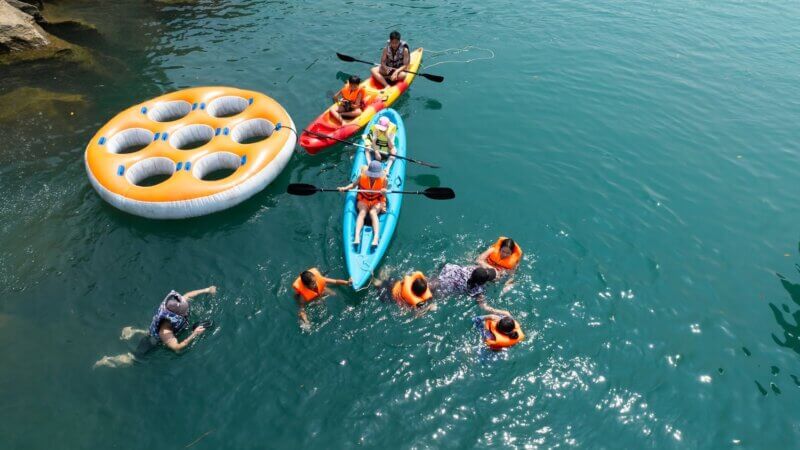
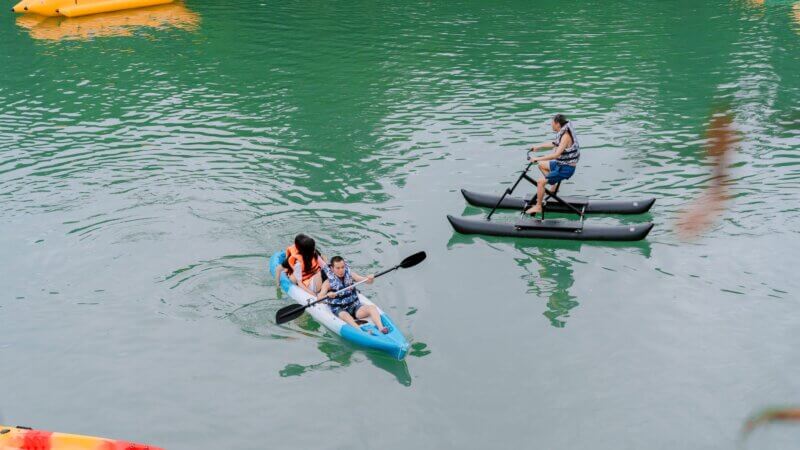
To enjoy the kayaking and SUPs or other water sports here, you can choose the package “Water activity” which costs 150,000VND/ person. The price includes access to kayaks, SUPs, water bikes, and open-water swimming in the designated water center.
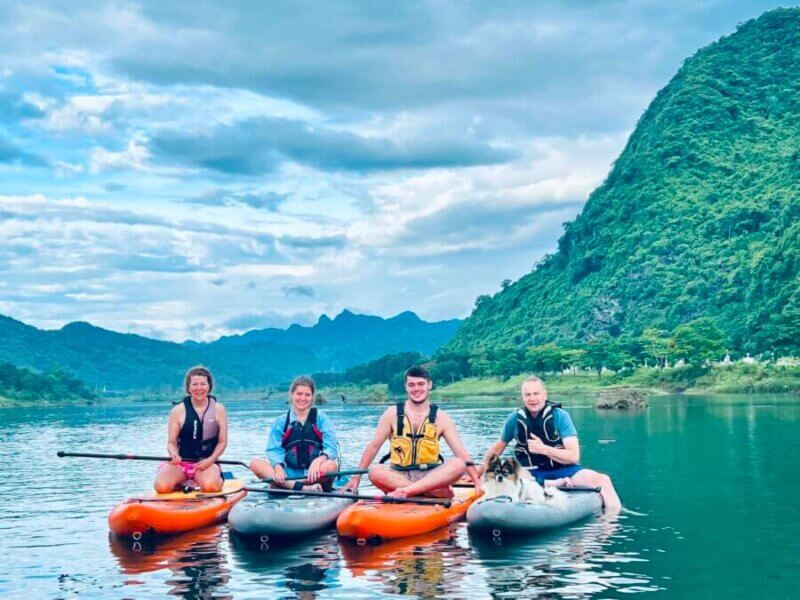
SUP at Phong Nha Valley
Kayaking at Phong Nha Valley
Besides, there are other options you can consider when you come to Phong Nha Valley:
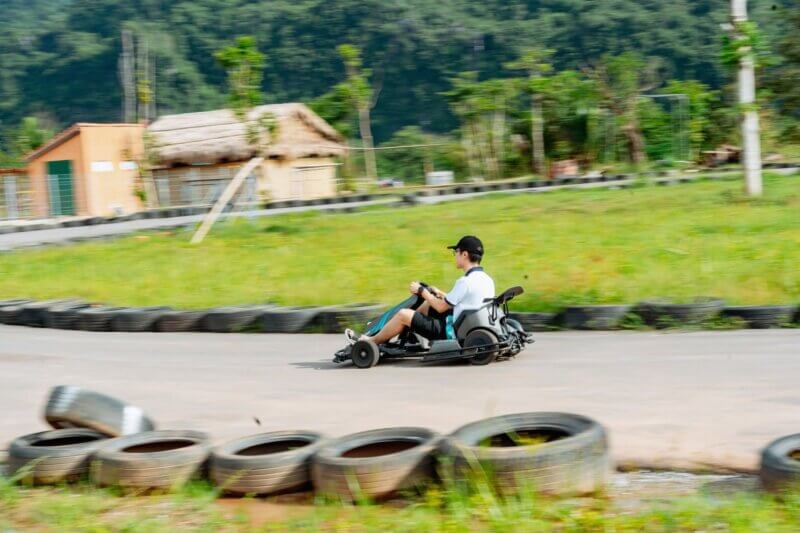
Go-Kart racing: 120,000VND/ person
Experience: A thrilling, fast-paced racing challenge for those looking to add some high-speed adrenaline to their day.
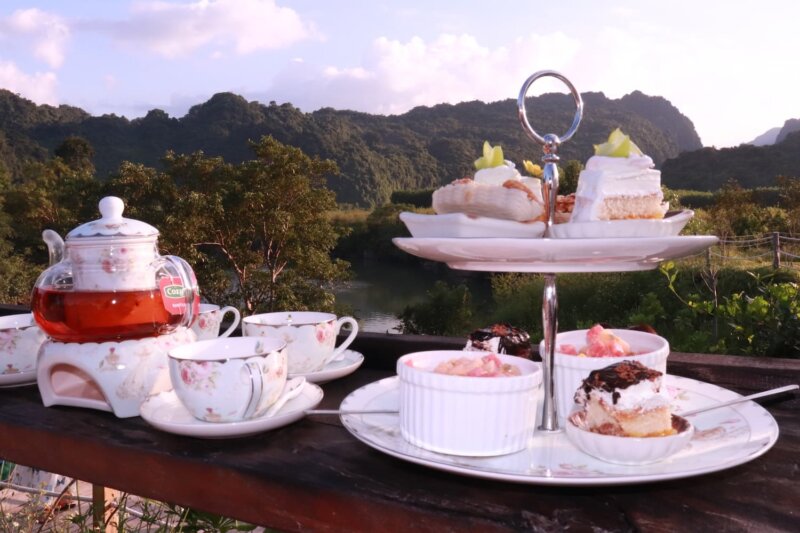
Afternoon tea break: 120,000VND/ person
Experience: A relaxed, slow-travel tea and sweets experience to unwind by the riverside.
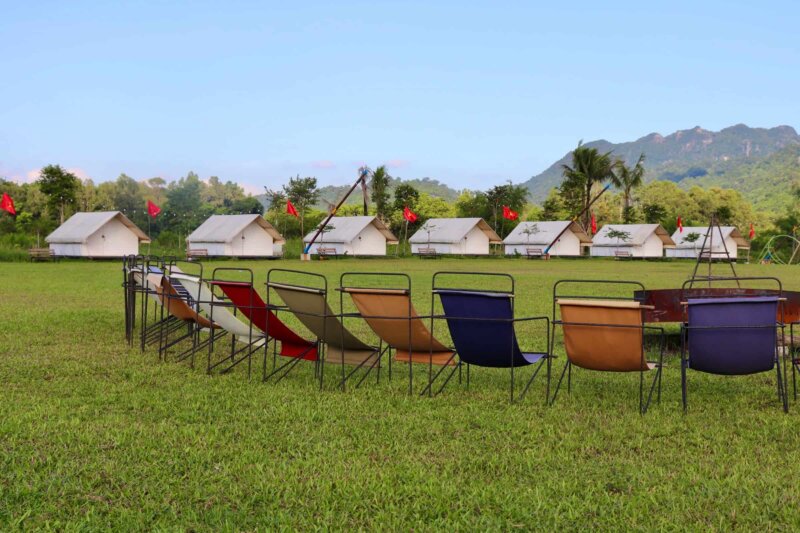
Glamping service: 750,000VND/ person
Experience: A premium, upscale camping experience that allows you to immerse yourself comfortably in the nature.
Tip: If you book the glamping service, kayaking and SUPs are already included in the price.
Go-kart track at Phong Nha Valley
Go-karting
Afternoon tea with a mountain view
Glamping at Phong Nha Valley
1.5. Chay Lap Water Sport Center
Located directly on the banks of the Chay River, the Chay Lap Water Sports Center (a part of Chay Lap Farmstay) is debatably one of the most professional and scenic spots in the region to rent top-quality kayaks and SUPs. The stretch of river here is wide, calm, and incredibly peaceful. It serves as a fantastic base for an early morning paddle to watch the mist rise off the limestone mountains, or a late afternoon cruise to soak in the timeless charm of the surrounding countryside.
Opening time: 6:00AM – 6:00PM
Price: 100,000VND/ hour/ Kayak or SUP
Recommended route: Paddling to the Son River confluence
Recommended Kayaking route from Chay Lap Riverside
From the water sports center, you can embark on a scenic paddle downstream to where the Chay River meets the iconic Son River:
Distance: More than 3 km (and another 3km paddle back)
Expectation: This is a remarkably tranquil kayaking route that connects you deeply with pristine nature and the authentic, slow-paced daily life of the locals living along the riverbanks. Especially, you will have more chances to watch Kingfishers, Herons, and many other wild birds.
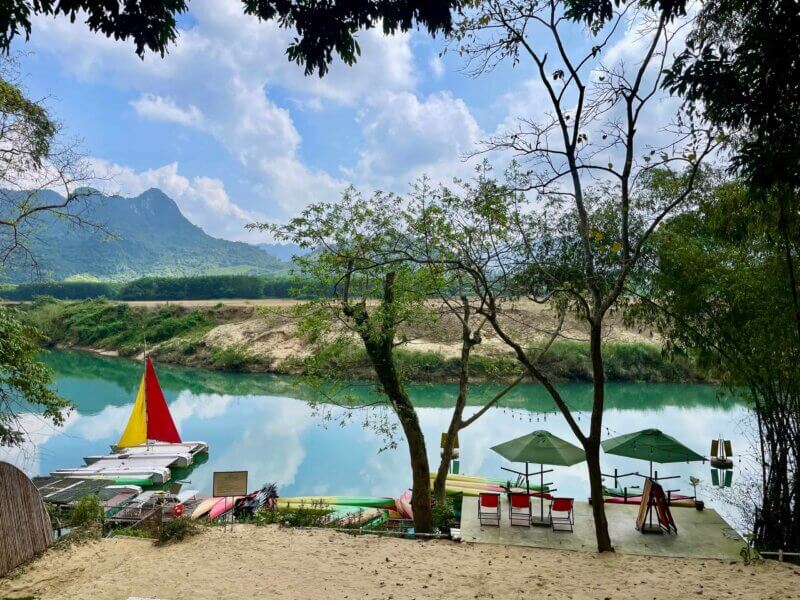
Chay Lap Riverside (Chay Lap Water Sport Center)
View from Kayak
Hanging bridge crossing Chay River
Tip: If you stay as a guest at Chay Lap Farmstay, you will have one hour of complimentary Kayak or SUP rental per day!
1.6. Phong Nha Lakehouse resort
The Phong Nha Lakehouse Resort is an idyllic retreat set against a stunning backdrop of lush mountains and tranquil waters. Nestled directly next to a picturesque lake, this resort provides a peaceful escape where visitors can rent kayaks to explore the glassy water at their own leisurely pace.
Beyond kayaking, the lake serves as a beautiful setting for open-water swimming or a relaxing afternoon of fishing.
Rental fee: 200,000VND/ Kayak for 2 hours
Kayaking at Phong Nha Lakehouse at sunset
Tip: If you stay overnight as a guest at the Phong Nha Lake House Resort, your stay includes a complimentary kayak or SUP session!
1.7. Independent rentals: Thao Nguyen Homestay
If you are an independent adventurer staying in Phong Nha town and looking to chart your own path, you can rent high-quality SUPs directly from Thao Nguyen Homestay, located conveniently right in the heart of town.
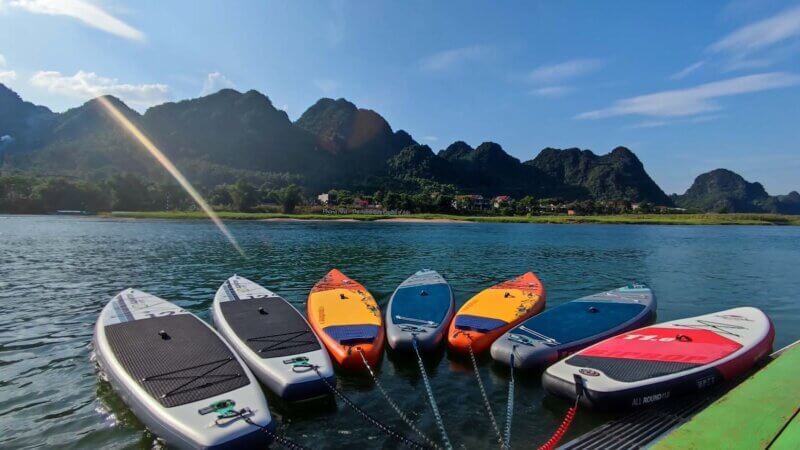
Renting from here gives you the ultimate flexibility. You can easily pack up the gear, head down to the main Son River right in front of the town, and paddle alongside local fishing boats, explore villages on the other side (Na village) or navigate your way toward the iconic mouth of Phong Nha Cave at your own leisurely pace.
A few tips if you choose to rent kayaks/ SUPs independently:
Tip 1: Head to Phong Nha Funky Beach If you are taking out a SUP independently, a fantastic spot to aim for is Phong Nha Funky Beach. It offers a wonderfully chilled atmosphere to unwind after a paddle, complete with cold beer, cocktails crafted from local liquors, and arguably one of the absolute best vantage spots for sunset in the area.
Tip 2: Avoid the boat traffic on the Son river If you choose to paddle on the Son River, try to avoid the peak window between 7:30 AM and 4:30 PM. These are the standard opening hours for Phong Nha and Tien Son caves. During this time, the river sees heavy traffic from the local fleet of blue motorized tourist boats, which can create wake and disrupt an otherwise peaceful, quiet immersion in the surrounding landscape.
A quick summary of kayaking/ SUP price in Phong Nha:
Location
Option / Ticket Type
Price (VND)
Dark Cave
With mudbath
450,000VND
With Zipline
250,000VND
Without zipline
150,000 VND
Hava Valley
With Zipline
250000 VND
Without Zipline
150000 VND
Ozo Park
Standard Ticket
200,000 VND
Phong Nha Valley
Water Activity Ticket
150,000 VND
Chay Lap Water Sports Center
Independent Rental
100,000VND/ hour
Phong Nha Lake House Resort
Independent Rental
200,000VND/ max 2 hrs
Thao Nguyen Homestay
Independent Rental
300,000VND/ max 4 hrs
2. A few tips for your paddling adventure in Phong Nha:
2.1. Best time to paddle
December to August offers ideal paddling weather, characterized by clear skies and breathtaking, vibrant water colors (December is a bit grey). The period from September to November marks the peak rainy and storm season when rivers are highly prone to sudden flooding. However, there are a few days without rain or storm and they the best days with wonderful temperature and clear sky.
Always wear a life jacket, particularly when navigating near cave entrances or river sections with subtle underwater currents.
Keep a safe distance from the moving blue motorized tourist boats to avoid their wake and ensure a smooth paddle.
Phong Nha blue boat
2.3. Protect the environment:
Pack out what you pack in. Secure your personal trash safely on your board to help us preserve Phong Nha’s pristine, delicate ecosystems!
2.4. Beat the crowds:
Popular tourist hubs like Dark Cave, Hava Valley, Phong Nha Valley, and Ozo Park can get quite busy during the peak summer months. If you prefer to explore at your own leisurely pace, consider renting your kayak or SUP from the Chay Lap Water Sports Center or Thao Nguyen Homestay for a much quieter, more tranquil experience on the water.
2.5. Board Capacity:
Keep in mind that a maximum of 2 people are permitted per kayak or SUP. Be sure to rent an adequate number of boards to accommodate your entire group comfortably.
2.6. Getting around
All of these paddling destinations are easily accessible via local taxis/ Grab or motorbike taxis (xe ôm).
We recommend installing the Grab app onto your smartphone prior to arriving in Vietnam for easy urban transit.
If you are a confident rider and carry a valid International Driving Permit (IDP), you can easily arrange a local scooter rental through your hotel or homestay. Expect prices to range from 100,000 to 150,000 VND / day (excluding fuel).
Easy Rider Option: If you prefer not to drive, you can hire a personal Xe Ôm (Easy Rider) to take you through the spectacular Phong Nha loop for roughly 350,000 to 400,000 VND/ day.
3. Final thoughts: paddle, slow Down, and immerse
There is such a rare magic in experiencing Phong Nha from the water. Whether you choose to challenge yourself on the turquoise rapids at the Dark cave or float serenely from Chay Lap Riverside, paddling allows you to truly slow down and connect with the raw rhythm of this incredible region. It transforms you from a mere spectator into a part of the landscape.
Yet, paddling is just one layer of the adventure. If you are looking to step off the water and lace up your trekking boots, dive into our Comparison of Phong Nha 1-day Adventure tours to discover what it feels like to trek in the primeval jungle. Or, if you prefer to write your own travel story, don’t miss our practical handbook on How to Explore Phong Nha Without a Guided Tour, packed with local secrets to help you craft your own independent journey through paradise.
If you are searching for an adventure tour centered around premium paddling, be sure to secure your spot on the Phong Nha Kayaking 4.5km expedition. It is the definitive journey designed to satisfy your inner aquatic souls.
3 EASY HACKS TO TRAVEL FROM DONG HOI TO PHONG NHA BY LOCAL BUS
“When in Rome, do as the Romans do.”
For the slow travelers, slowing down to deeply absorb the authentic local lifestyle of each destination is where the magic happens. Opting for public transportation, dining at a humble family-run eatery, or attempting to have a conservation with locals in their mother tongue sounds very stimulating yet challenging.
However, “where there is a will, there is a way”. To travel from Dong Hoi to Phong Nha by local bus is an adventure in its own right, offering a rare, unfiltered glimpse into everyday Central Vietnamese life.
1. The authentic experience: Travel from Dong Hoi to Phong Nha by local bus
1.1. Dong Hoi – Phong Nha local bus schedule & directory
Several local buses run daily between Dong Hoi and Phong Nha, passing right by popular spots like Phong Nha Funky Beach and Phong Nha Lakehouse resort. The journey typically takes around 1 – 1.5 hour, and ticket prices range consistently between 50,000 VND and 60,000 VND per person, each way.
You can contact the following local bus operators to check or book seats in advance:
Hoai Niem Bus(Highly Recommended)
Phone: +84 82 472 4333
Phong Nha ⇒ Dong Hoi: 5:40 AM / 9:10 AM
Dong Hoi ⇒ Phong Nha: 7:00 AM / 2:30 PM
Ngoc Anh Bus
Phone: +84 913 559 357
Dong Hoi ⇒ Phong Nha: 8:00 AM / 3:00 PM
Phong Nha ⇒ Dong Hoi: 10:30 AM / 5:00 PM
Thao Van Bus
Phone: +84 128 282 73
Dong Hoi ⇒ Phong Nha: 9:00 AM / 2:00 PM
Phong Nha ⇒ Dong Hoi: 11:00 AM / 4:00 PM
Đạt Dũng Bus
Phone: +84 911 858 772
Dong Hoi ⇒ Phong Nha: 5:30 AM / 11:00 PM
Phong Nha ⇒ Dong Hoi: 8:15 AM / 4:45 PM
Bằng Châu Bus
Phone: +84 911 808 567
Dong Hoi ⇒ Phong Nha: 1:20 PM
Phong Nha ⇒ Dong Hoi: 7:20 AM
Phong Nha – Dong Hoi Ngoc Anh Local bus. Photo: Internet
1.2. Special notes:
Because these are local buses, departure times can occasionally vary depending on the drivers’ schedule and… their “mood”, and the they rarely speak English. This option is perfect only if you have an open schedule and a Google Translate app ready on your phone.
When waiting for the bus, just keep an eye out for a sign on the front that reads “Phong Nha / Trooc” to make sure you are flagging down the right one.
If you are arriving in Dong Hoi via train or plane, here is how to smoothly connect with the local bus line:
From Dong Hoi Railway Station: Walk or take a short ride (about 1.2 km) to the Nam Ly Bus Station area on To Huu Street. This is the most convenient and reliable spot to wait for and catch the bus to Phong Nha.
I usually take a hidden shortcut that isn’t on Google Maps, but it’s really meant for locals. I wouldn’t recommend it for visitors—it’s way too easy to get turned around!
Dong Hoi Train Station to the nearest bus stop
From Dong Hoi Airport: Please note that local buses do not enter the airport terminal directly. We highly recommend taking a taxi or a motorbike taxi (xe ôm) to a nearby pickup point on National Highway 1A (Quốc lộ 1A) or Huu Nghi Street, where you can easily catch the bus as it passes.
Dong Hoi Airport to the bus stop to Phong Nha
2. Faster & more flexible alternatives
If you are on a tight schedule, traveling with heavy luggage, or simply prefer a seamless transition, there are two excellent alternative options available:
Option 1: The daily Dong Hoi – Phong Nha shuttle bus (Comfort & Convenience)
For a stress-free journey, you can book the premium daily shuttle bus service. It offers a direct, air-conditioned link between the two destinations.
Contact (WhatsApp): +84 848 730 000 (Booking in advance is highly recommended)
Schedule:
Dong Hoi ⇒ Phong Nha: 7:30 AM
Phong Nha ⇒ Dong Hoi: Between 3:45 PM and 4:00 PM
Fare: 120,000 VND/person/ way
The Perks: This service includes convenient door-to-door pickup and drop-off at hotels within the main Dong Hoi and Phong Nha areas.
Option 2: The shared car between Dong Hoi and Phong Nha
Driven by the rising transit demands of both locals and independent tourists, the “Shared Car” (xe ghép) community has flourished. It functions like a localized ride-share network and is incredibly easy to use.
How it works: Simply join one of the local Facebook transit groups and write a short post stating your travel date, desired departure time, pickup spot, and destination. Within minutes, available drivers will respond to offer you a seat.
Fare: Fluctuates flexibly between 80,000 VND and 120,000 VND / seat / way.
And here is the magic phrase for the Facebook group: “Cần [quantity of seats] ghế từ [pick-up point] đến [drop-off point] vào lúc [time], [date]. Xin chân thành cảm ơn”.
Eg: Cần 2 ghế từ Quán Cà phê Tree Hugger đến Khách sạn Celia Phong Nha vào lúc 3:00pm, 24/6/2026. Xin chân thành cảm ơn.
Translated: I need [number of needed seats] seats from [pick-up point] to [drop-off point] at [time], [date]. Sincerely thanks.”
Ready to embrace the slow travel?
Taking the local bus from Dong Hoi to Phong Nha is not just about getting from point A to point B—it’s an invitation to slow down, share a smile with friendly locals, and experience Central Vietnam exactly as everyday locals do. While it might take a little extra patience compared to a private car, the stories, scenery, and authentic connection you are gonna get along the way are well worth the ride.
Have you navigated this route recently, or do you have any questions about current timetables and local stops? Drop a comment below—we’d love to help you plan your journey!
Once you have safely arrived in Phong Nha or if you are mapping out the rest of your Central Vietnam itinerary, take a look at these hand-picked experiences to deepen your adventure:
Immerse in local culture: If you are traveling during the festive season, experience the warmth of a traditional community celebration with our Lunar New Year Family Experience in Đồng Hới.
Connect with Nnature: Looking for more off-the-beaten-path wildlife encounters later in the year? Discover our seasonal Côn Đảo Turtle Release & Snorkeling Tour.
DONG HOI TRAVEL GUIDE
Dong Hoi is a charming and less crowded harbor town on the coast. It’s a peaceful getaway with beautiful views of the Nhat Le River. The town has pristine sandy beaches on its both north and south sides, inviting visitors to relax and enjoy the untouched coastal scenery. Whether you’re walking along the river, swimming in the clear water, or just enjoying the sea breeze, Dong Hoi offers an authentic and unspoiled Vietnamese experience.
1. Dong Hoi – What to see
1.1. Nhat Le Beach
If you travel to Dong Hoi, Nhat Le is a must-see beach – quiet sun-drenched seaside, pure white sand and sparkling crystal blue water. Nhat Le beach is a dream place for those who love playing with waves, being cuddled by gentle currents or simply feeling the smooth sand under your bare feet.
“Nhat” means Sun while “Le” means teardrops; “Nhat Le” means the tears of the Sun. The name came from a historic event in early 17th century. Back in those dates, Vietnam was under the leadership of The Trinh Kingdom (The North – Outer Realm) and the Nguyen Kingdom (The South – Inner Realm) at the same time. Because of the unresolvable conflicts between two regimes, Gianh River was used as a border separating two parts of the country. The immigrants in the south nostalgically looked towards their homeland in the North. Their tears dropped, mingled with the river and flowed into the beach. Since then, the beach has been called Nhat Le.
Unlike many other beaches in Vietnam, Nhat Le beach still remains its pristine charm. Taking a walk along the charming river or simply lying down on the sand floor and letting the fresh breezes caress you are something you can expect when visiting the beach.
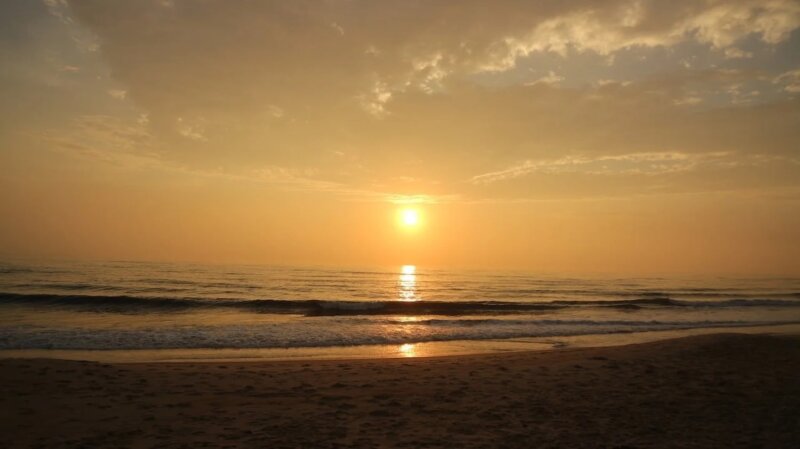
The best time to enjoy the beach is the early morning when it is amazingly peaceful. The whole world is for you. Spend this time to do some meditation with the sunrise and feel grateful to our Mother Nature.
The break of dawn
Sunrise in Nhat Le Beach
Dawn
Start the day in Dong Hoi
If the early morning is the time for your own, evening is the time for socialization. Let’s find yourself a seat at a small local food stall along the beach, grab a beer, order some seafood and enjoy the local vibe. Oh My God, nothing can beat this moment.
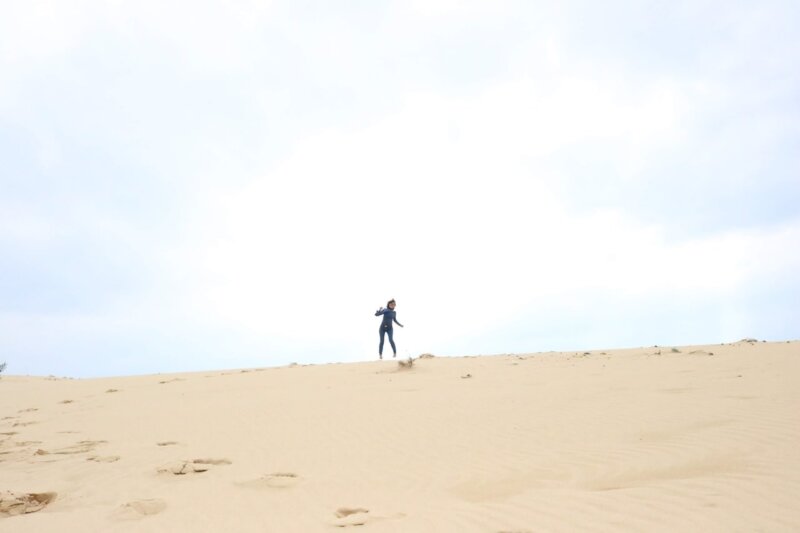
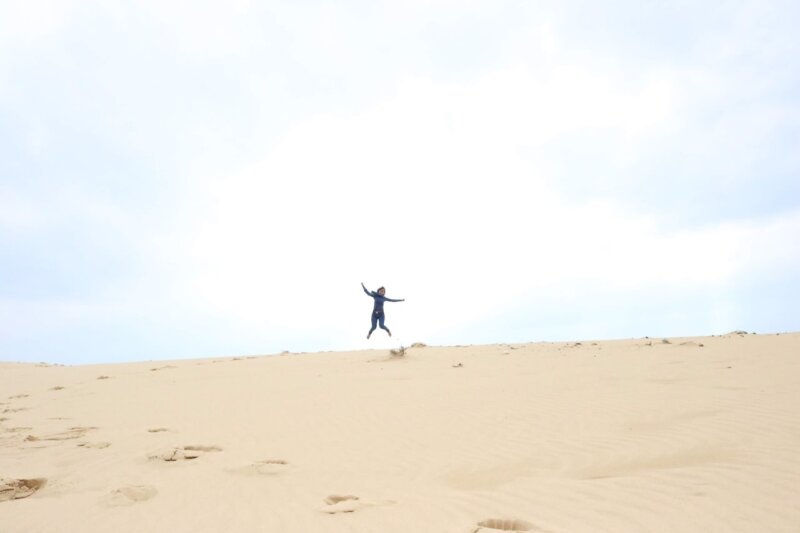
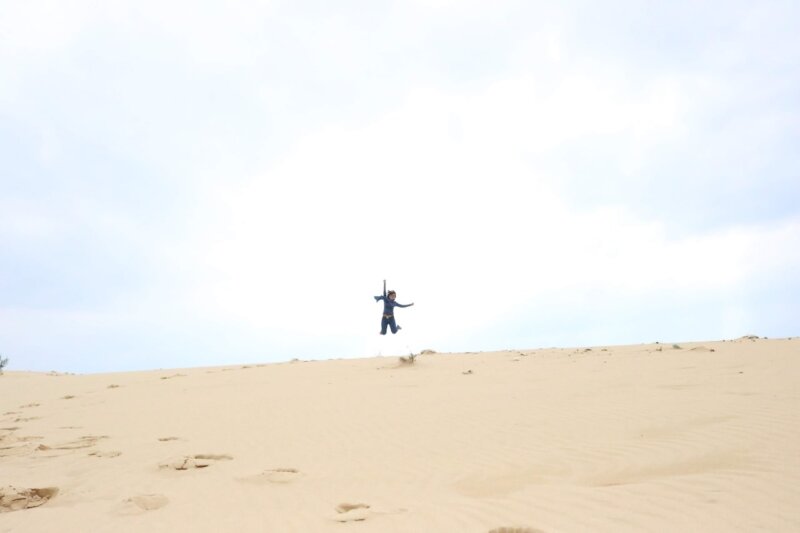
1.2. Quang Phu Sand dune
“Quang Phu sand dune is located in Quang Phu commune, adjacent to Nhan Trach commune, Bo Trach district, about 10km from the center of Dong Hoi city to the Northeast”.
That’s what people say.
This is what I say: If you want to get there, ask Mr. Google: Doi Cat Quang Phu; that’s it. If you want to ride a bicycle there, go for it. But I would recommend you to jump on a scooter and head to the place instead, especially in hot summer weather when the temperature can reach 39 Celsius degrees or even higher.
What can you expect at Quang Phu Sand dune?
Ocean view: Of course. The panoramic view here can be considered the most favorite view of many people. No need to describe more, the scene of blue horizon adjoining the golden soft sand hill will sooth your soul.
Sand boarding: If you want something more active, try sand boarding. It’s fun, and it’s funnier when you are with your buddies. It’s hard at the beginning (definitely) but when you get used to it, oh, set the time to leave before you become addicted with it. Rent a simple plastic board nearby with the price at 30,000VND for two hours and go ahead to master your skill.
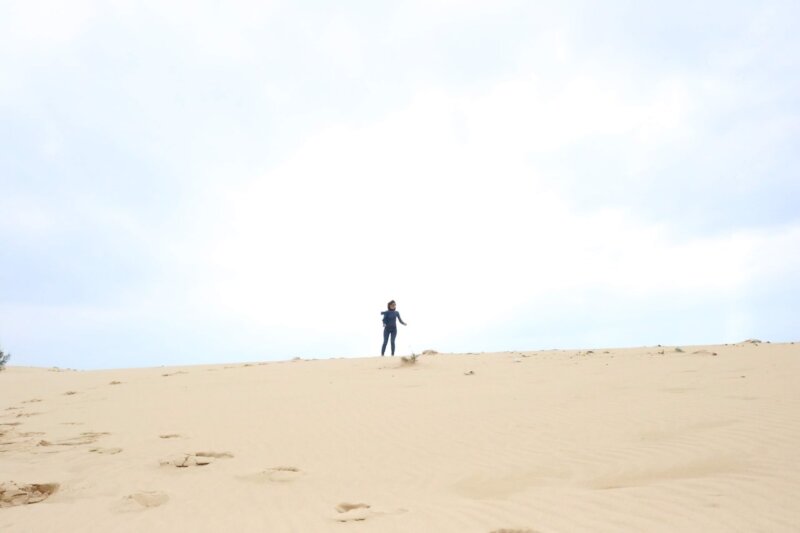
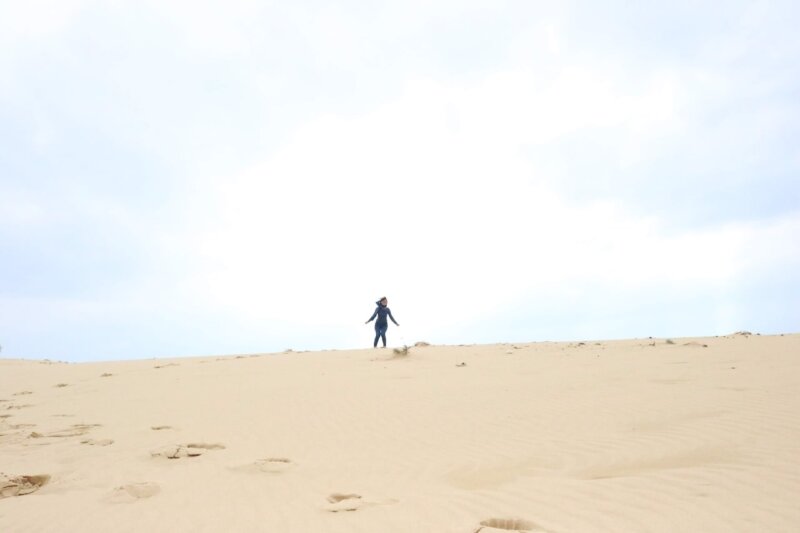
Having fun with the sand dune
The best times to visit sand dunes are early morning (5:00-8:00 am) and late afternoon (4:00-6:00pm). Please avoid the mid-day time due to the possible extreme heat. Also, don’t forget to apply the sunscreen unless you wish to become a lump of coal.
1.3. Tam Toa Church Ruin
“Tam” means Three while “Toa” means Towers. The Towers were the worship places for three princesses who are Huyen Tran, Lieu Hanh and Cuu Huyen That To.
Tam Toa Church, which was constructed in Portuguese style, was considered one of the most beautiful churches in Vietnam. During the Vietnam War, the church was destroyed badly by American bombs in 1965, and the ruin now is preserved as a war vestige.
Tam Toa Church Ruin
Tam Toa Church is an old Catholics church built during in 1887 when Dong Khanh Emperor actively adopted French culture. He allowed the European priests to preach the Catholic along the seaside and rivers in the country. The present building was constructed in Portuguese style with a typical large bell tower. Fr Claude Bonin (chief engineer) chose a hill on the breathtaking shore of Nhat Le river to build the Tam Toa Church, as the place was easy to reach by boats.
Tam Toa Church is built in the style of Gothic architecture of Europe. There is documented in detail is Portuguese architecture, with a bell tower higher than 10m. According to the records, the church was renovated and redecorated in 1940, spacious and beautiful than the original situation. Unfortunately, there are not many detailed records detailing interior decoration as well as layout
Around the story of Tam Toa Church where there was a fire of war against the fire, there were many controversies and controversies in the time of the restoration of architecture and spiritual life of Christian. It can be said that the events took place at the Tam Toa Church, making this place one of the most consecutive ups and downs of Quang Binh province, which when tourists have the opportunity to travel here.
1.4. Quang Binh Gate – A remnant of Vietnamese Civil War
Quang Binh gate is one of three gates of Dao Duy Tu Wall – The citadel system dated from 1631 that protected the Inner Realm from attacks by Trinh Dynasty from the North. Quang Binh Gate, which was built in 1639, has been restored to its original state after heavily damaged so many times, now is standing as a historic evidence for the hard time of the country.
Dao Duy Tu is a talent from Thanh Hoa – a province of Dang Ngoai (Outer Realm – ruled by Trinh Dynasty) but was valued high by Nguyen Phuc Nguyen Lord who ruled Dang Trong (Inner Realm – Southern Vietnam from Gianh river). For nearly 50 years of fighting between Outer and Inner Realms, the Inner area by Nguyen Lord stayed strong thanks to the walls by Dao Duy Tu. “Thay” meaning “teacher” is the way Nguyen Lords called Dao Duy Tu to show their respect to him.
Unfortunately, only very few small parts of the wall system keep remained after bitter wars in the past.
1.5. Dong Hoi market: The City’s vibrant soul
Located right in the heart of the city along the river, the Dong Hoi Fish Market is the best place to experience authentic local culture and coastal life.
The Fresh Catch: Watch local fishermen proudly display an extensive, colorful array of daily marine treasures, from mackerel scads and squid to sea clams.
Beyond Seafood: It is a food lover’s haven. Explore aisles packed with fresh regional fruits, vegetables, traditional herbs, and aromatic spices essential to Vietnamese cuisine.
The Atmosphere: Immerse yourself in the bustling energy, lively vendor banter, and rich aromas that make this market a must-visit sensory experience.
Tip: Visit Dong Hoi market early in the morning to catch the peak energy when the fishing boats arrive, and don’t hesitate to snap photos of the beautifully arranged stalls!
Dong Hoi market
1.6. Quang Binh Museum
“Museums are highly credible sources of information”.
With nearly 1,000 photos and precious items are on display, Quang Binh museum is a historic place you absolutely don’t want to miss in Dong Hoi trip. Various thematic exhibitions are displayed in a three-storey building to tell you the whole story about Quang Binh province:
Theme 1: Nature and natural resources of Quang Binh
Theme 2: Culture of ethnic groups in Quang Binh
Theme 3: Quang Binh pre-historic period and Champa culture
Theme 4: Quang Binh from the 11th century to 1945
Theme 5: Quang Binh during the resistance war against the French colonialists (1945 – 1954)
Theme 6: Quang Binh in the war against the USA for (July 1954 – May 1975)
Theme 7: Quang Binh in the period of Socialism construction and development (from 1975 to present)
You also can found a number of collections thanks to the archaeological discoveries implemented within the province. Some of them are: The collection of pottery, utensils and porcelain, the collection of My Cuong pottery-ceramics, and the collection of ancient Vietnamese and Chinese coins (aged from 200 to 2000 years ago).
The Quang Binh museum is a must-see for history lovers and curious travelers. It holds a fascinating collection of artifacts and exhibits that tell stories of wartime survival and post-war rebuilding, representing the strong spirit of the people of Quang Binh. Exploring the museum will make you feel connected to the past and appreciate the challenges and successes that have shaped this province. Set aside time to immerse yourself in the history at the Quang Binh museum.
Tips: All mentioned places (except for Quang Phu sand dune) can be easily reached by a 5 or 10 -minute bicycle riding from the hotels within Dong Hoi center.
2. Dong Hoi – What to eat
Fun facts about Food in Dong Hoi:
i.What people didn’t bother to eat in the past now becomes specialties.
ii. The best food is usually served in simple food vendors, mainly at their homes and rarely advertised on social media. As the local people turn their kitchen into a home restaurant, you will have to “go the extra mile” because the best food is not always at the center of the town.
The good news is that Dong Hoi is a super small town and you can reach the amazing food easily by a few minutes bicycle riding.
2.1. Banh Loc (Tapioca Dumpling)
Banh Loc (Clear Tapioca Dumpling) is a favorite and popular snack of Dong Hoi people and some other provinces in the Center of Vietnam. Banh Loc is made of Tapioca flour filled with meat and shrimp (or yellow mung bean) and served with fish sauce. Banh Loc is voted as one of the most 30 yummy dumplings in the world by CNN Travel.
There are two main types of Banh Loc, which are banana leaf-wrapped one and non-wrapped one. It is very easy for you to find small stalls along the street or in the market where you can enjoy this snack, but the most famous shop is Huong Hoai at No. 17, Le Thanh Dong Street.
Clear Tapioca dumplings in Dong Hoi
2.2. Chao Banh Canh (Vietnamese Udon)
It is not difficult for you to find a signboard with “Chao Banh canh” or “Chao canh” when riding along the streets in Dong Hoi. Chao is usually translated into rice porridge through Vietnam but Chao Banh Canh (Thick noodle soup) is actually made of rice flour- noodles with broth. There are different toppings in a bowl, which can be fish, crab, shrimp, egg, pork, etc. Chao Banh canh now becomes the most popular breakfast of Dong Hoi residents.
Thick noodle soup – common breakfast for locals in Dong Hoi
Where to eat Chao Banh Canh:
1. O Hanh restaurant – No. 04 Le Thanh Dong Street
2. Ba Hong Restaurant – No. 51 Nguyen Huu Canh Street
3. Me Luoc traditional restaurant (more than 60 years now) – No. 238 Ly Thai To Street
4. Quan 75 – No. 01 Le Quy Don Street
2.3. Banh beo (Steamed Rice Cakes with Shrimp)
Banh beo is a favorite snack for locals in Dong Hoi
Among dozens of snacks in Dong Hoi, Banh beo is always ranked high in the must-try list. Like many other dishes in Vietnamese cuisine, Banh beo is the wonderful combination of fishing and farming products. Rice flour remains the primary component, ground steamed shrimp is indispensable. However, the factor that makes the dish’s taste is fish sauce. Fish sauce for Banh Beo is not as salty as the regular one, but it is sweetened by shrimp broth and sugar. The taste is the perfect harmony of the softness of steamed rice flour, the sweetness of ground shrimp and the saltiness of the fish sauce.
2.4. Banh Xeo (Crispy Vietnamese Pancake)
Bánh xèo is served everywhere in Vietnam, with slight regional differences in ingredients. Traditionally, it is served in a unique way, usually complemented with vegetables such as lettuce, carrots, and cucumbers, heavily seasoned with fresh cilantro, mint, and parsley. With saying so, you probably heard about Banh Xeo when travelling through Vietnam. However, the fresh ingredients here make Banh Xeo in Dong Hoi so tasty.
Banh Xeo is a famous Vietnamese dish that combines crunchy crêpes with a variety of savory ingredients. The distinctive Vietnamese element in these nourishing pancakes is rice flour, which is combined with water and turmeric.
Additional ingredients, most commonly scallions, bean sprouts, shrimps, and cubed pork or beef, are sautéed before the mixture is added to the pan. The pancake is pan-fried at a low temperature and gently folded in half, keeping the ingredients safely tucked inside the pancake.
Visit Dong Hoi for a tranquil break from your exhilarating Vietnam travels. As you arrive in this quaint little town, a sense of tranquility washes over you, allowing you to pause, take a deep breath, and fully immerse yourself in the beauty that surrounds you. Every moment spent in Dong Hoi is like a glimpse into the heart and soul of Vietnam, revealing why the local people hold such deep affection for their beloved hometown.
To make the most of your experience and to truly delve into the rich culture and culinary delights in Dong Hoi, why not consider joining the Dong Hoi Sightseeing & Street Food tour by bicycle? This exciting tour ensures that you won’t have to explore the town alone, but rather, you’ll be accompanied by knowledgeable guides who will lead you on an unforgettable adventure.
So, hop on a bike, leave your worries behind, and let Endless Vietnam guide you through the enchanting streets of Dong Hoi, where every corner holds a delightful surprise for you to discover.
EXPLORE PHONG NHA WITHOUT A GUIDED TOUR
Explore Phong Nha independently is a unique opportunity to discover the region of stunning nature and rich culture. Visitors can navigate the area at their own pace, allowing for a more personal experience. This comprehensive Phong Nha travel guide will provide essential information on attractions and unique activities, ensuring a memorable adventure. Embrace the freedom of independent exploration in Phong Nha for an authentic travel experience.
1. Explore Phong Nha’s caves
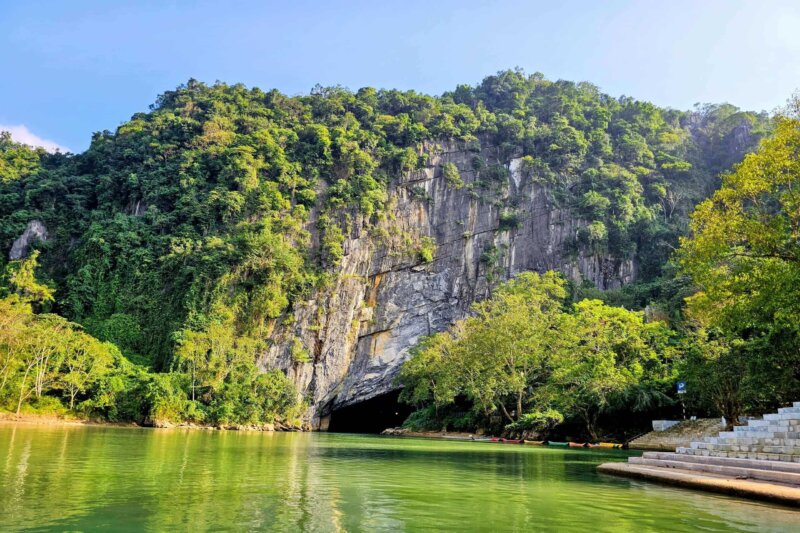
More than 400 caves have been found in Phong Nha; it’s undeniable to say that Phong Nha-Ke Bang National Park is the Cave Kingdom and visiting caves is kind-of-a-must here. Though a number of caves require you to trek through jungles, cross the rivers or even spend nights camping in the jungle, there are several easy-to-access caves available for you to explore by yourself.
1.1. Phong Nha cave and Tien Son cave:
Phong Nha cave is renowned for its breathtaking natural beauty. It is nested amidst limestone karst and lush jungle, making the surrounding landscape incredibly picturesque. The cave entrance can be reached by a 30-min boat ride along the Son river.
Meanwhile, Tien Son cave, of which entrance is around 100m away from Phong Nha’s, is another preferred one. The cave has a length of 980 m and is at altitude of about 200 m above sea level. With that said, you will have to climb up 583 steps to access the entrance of cave. It also means you will have an amazing photogenic view of the Son river, paddy fields and the villages nearby from the viewpoint.
Both Phong Nha Cave and Tien Son cave are easily accessible from Phong Nha town. If you stay at a homestay/ hotel in Phong Nha, it is actually just a short walk to the ticket counter. Please check the price list of the ticket price as below:
Phong Nha cave: 150.000VND/ pax
Tien Son cave: 80.000VND/ pax
Kids below 1.3m tall: Free
Boat ride (maximum 12 pax): 700.000VND/ boat for one cave and 750.000VND/ boat for two caves.
Opening time: 7:30am – 4:00pm.
If you plan to do both caves, please show up at the ticket counter no later than 2pm; and no later than 3pm if you want to do one of the two caves.
If you are a solo traveler, no worries. You can ask other travelers to share the boat with you; great chance to meet other wonderful like minds, isn’t it?
Phong Nha cave entrance
Phong Nha Boat Station
Along Son River
Hike to Tien Son cave
Phong Nha blue boat
Phong Nha Cave
View from Tien Son Cave
Tien Son cave
1.2. Paradise cave (Thien Duong cave in Vietnamese)
Exploring the Phong Nha area independently isn’t complete without stepping into Paradise Cave. Paradise Cave is about a 45-minute drive from Phong Nha town. You can arrange transportation through your accommodation. If you are not confident with driving motorbike but still would love to experience the motorcycle, we would recommend you to take the easy rider/ motorbike taxi/ “xe ôm”.
When reaching the cave, purchase the tickets at ticket counter:
Adult: 265,000VND/ pax including goft cart transfer
Kid (1.1m – 1.3m): 145,000VND/ kid
Kid (under 1.1m): Free
Please make sure you bring a bottle of water and your camera to set off.
Paradise Cave is actually 200m above sea level, with the entrance set high into the side of the mountain with a set of 560m slope to take you up. To get to the foot of the hill, you can either walk about 1.6km to the start of the steps, or take a goft cart to the stairs (already included in your tickets). If you choose to take the cart, there is a waiting area next to the ticket gantry. If you opt to take a walk, there will be a high chance for you to see the wildlife along the way. You might see a lot of butterflies, different kinds of birds, owls or squirrels.
Safety Tip: Please use the walking path for pedestrians and avoid walking on the buggy paths.
From the entrance, you descend into Paradise. Please be advised that the steps down and up at the entrance of the cave are unavoidable so, unfortunately, Paradise cave is not accessible for those with disabilities.
That first glimpse into the dark of the cave is really something. The boardwalk takes you 1km into the cave, with lights illuminating the rock formations and sheer scale of the cave.
You will spend approximately 2-2.5hr in total exploring, including the walk up to the cave and the boardwalk.
Best time to visit: Early morning (7:30–9:00 AM) or late afternoon for the quietest experience. Avoid the peak mid-day rush to enjoy the cave in peace.
Soda straws in Paradise cave
Walking path to Paradise cave
Colorful wall
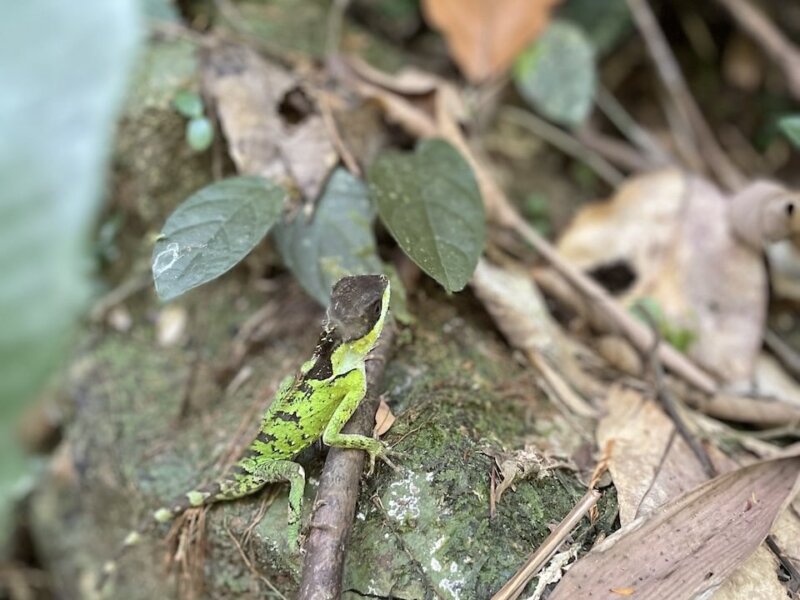
A lizard along the walking path
The arch ceiling in Paradise cave
Magnificient speleothem
2. Fill the day with excitement at Dark cave
If you’re wondering why this cave got the name ‘Dark Cave’, it is because the whole cave has absolutely no artificial lighting system; and you’ll find that the majority of the rocks are dark; primarily dark gray or black. Also, after an unforgettable mud bath, you will be even darker than the cave!
After arrive at the Dark cave, please follow the steps:
Get the locker’s key for your belongings with the deposit of 50,000VND/ locker. The amount of money will be refunded upon return of the locker key.
Change your clothes to swimwear
Sign your name at the commitment form
Purchase the tickets. There are different package options for you:
2.1.Full Access (Zip lining, Mud bathing and other water activities)
Includes: Zip line (weight 40kg and under 90kg), kayak, swimming, water sports, helmets, headlamps, safety equipment.
Adults: 450.000VND/ pax
Kid (1.1-1.3m): 150.000VND/ pax
Kid (under 1.1m): Free
Please be advised that kids are not allowed to do the zip lining.
Please be sure to bring:
Swimwear (no surf suit).
Towel
Waterproof phone pouch (to take photo in the water)
Water shoes(highly recommended).
Before the mud bath, you will have to walk over a rocky part, then muddy path. Water shoes will really protect your feet from the rocks and slipperiness.
Having fun with mud in the Dark cave
2.2.Limited access (Zip lining and other water activities, No Mud bathing)
Includes: Zip line (weight 40kg and under 90kg), kayak, swimming, water sports, safety equipment.
Excludes:Mud bath in Dark cave
Adults: 220.000VND/ pax
Kid (1.1-1.3m): 110.000VND/ pax
Kid (under 1.1m): Free
Safety Precautions:
Listen carefully to your guide’s safety instructions, especially when participating in adventure activities.
Be cautious while walking and swimming inside the cave, as it can be dark and slippery.
Please be sure to bring:
Swimwear (no surf suit).
Towel
Sunscreen
Waterproof phone pouch (to take photo in the water)
Water shoes(highly recommended).
Pack a pair of water shoes for the zip-line! The Central Vietnam summer sun makes the ground scorching hot, and your bare feet will definitely feel the burn on the way up to the tower.
Notice: Using the zip-line requires you to be between 40-90 kg. No exceptions.
2.3.Limited Access (Water activities only, no Mud bathing, no Zipline)
If you are seeking out the chance to cool down your body with the transparent water, go kayaking/ SUP or some games on the water, this option is for you.
Includes: Kayak, swimming, water sports, safety equipment.
Excludes:Mud bathin Dark cave, Zipline
Adults: 150.000VND/ pax
Kid (1.1-1.3m): 110.000VND/ pax
Kid (under 1.1m): Free
Cool down your summer at the Dark cave
3. Become a duck leader at farms
Spending time at a Duck farm is a unique and relaxing way to connect with nature, interact with ducks, and enjoy the peaceful countryside of the region.
There are three different duck farms you can spend time with; all are located in Bong Lai valley. Along the way to get there, you will be able to see the rice fields surrounded by the limestone ranges and farmers working on the fields.
Please take this chance to play with ducks, feed the ducks and learn how to become the duck leader.
List of Duck farms in Phong Nha:
The Duck Stop: 100k/ pax (Play with ducks, savor home-made Vietnamese pancake at the end)
The Duck Tang’s farm: 150k/ pax (Play with ducks, buffalo, fishing, enjoy garden fruits or some home-made crepe)
The Duck Farm: 150k/ pax (Play with ducks, buffalo, paint the mini conical hats)
How to get to the Duck farms in Bong Lai Valley:
All the duck farms are located in Bong Lai valley. You can take the bicycle from your hotel/ homestay or rent a motorbike for longer use. Please be advised that Bong Lai valley is around 10km away from Phong Nha center; consider to choose the proper vehicle for you.
Update: If you are a solo traveler, a Grab bike is also available now.
Become a duck leader at a farm in Bong Lai valley
4. Sunset at Phong Nha Funky Beach
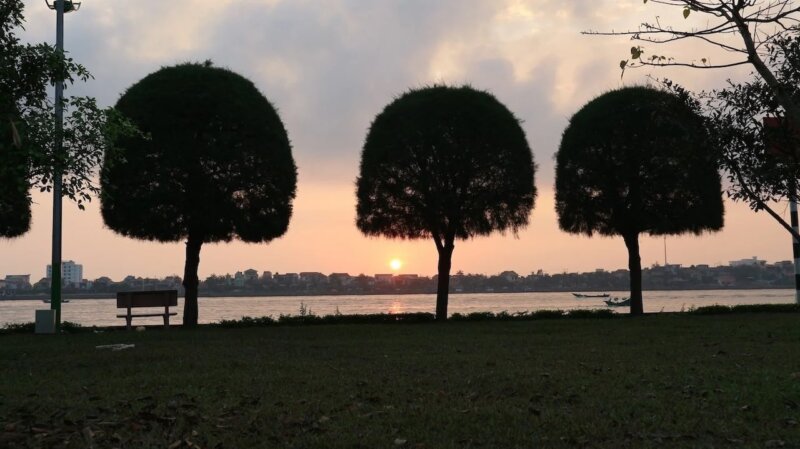
Sunset at Phong Nha Funky Beach is a breathtaking natural phenomenon that captivates visitors with its stunning beauty and serene ambiance. Watching the sun going down in Phong Nha Funky beach is a must in your self-exploration in Phong Nha.
Phong Nha Funky Beach offers benches and deckchairs from which you can enjoy the sunset. You can choose to relax on the sandy beach, sit on the pier or soak yourself into the water to witness the sunset from a different perspective while having a sip of cocktail.
Best time to come to Phong Nha Funky Beach: 3:00pm – 6:30pm.
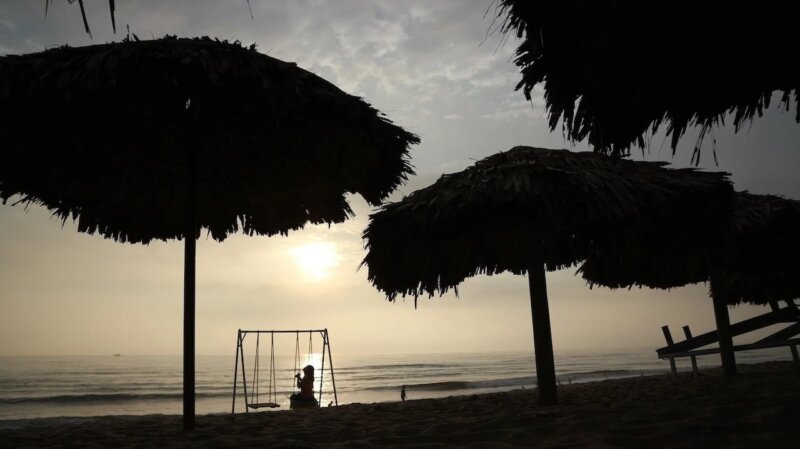
Price: The entry is free. You just need to pay for food/ drinks there and all games are free: Swim, rope swing.
If you are traveling with kids, Phong Nha Funky Beach is an amazing place where your kids are able to join all the activities here, get so excited with water and can catch some fish and little crabs.
What to bring:
Swimwear
Sun hat
Sun glasses
Sunscreen
Phong Nha Funky Beach – A spot for sunset
7. Jungle hiking in Botanic Garden
Botanic Garden is my favorite place in Phong Nha even though the name can be misleading. Please don’t expect something like Botanic Garden in Singapore or in Sydney, it’s totally jungle hiking in Phong Nha Botanic Garden.
The area is around 8.6km (5.34 miles) away from Phong Nha town. If you opt to take the bicycles which are free at your hotel, it’s a total of more than 10-mile journey. Honestly, you need to be in very good shape for cycling. The roads are quite flat but it gets a little tougher as you get closer to the place. Intense heat, humidity and a 10% road incline are things you have to take into consideration.
Another easy option for you in this condition: Rent a motorbike. The rental price is between 120,000 and 150,000VND/ day excluding gas. Or, again, easy rider/ motorbike taxi/ xe ôm.
Why do I love this place?
It is not crowded. The botanic garden is open from 7:30am to 5:00pm; and it almost never really gets too crowded so you don’t need to “go early to beat the crowds”.
You can get away from the hustle and bustle Vietnam and enjoy your own world. I’m sure you will find yourself really calm, peaceful and relaxed in pure nature, lush green, birds and crickets’ sounds. Fill your lungs with oxygen and exhale all stress or anxiety in your life. This moment is yours.
The garden really offers you chance to keep fit. Imagine it’s 40 Celsius degrees outside and you step to the jungle filled with canopies and water flowing. How much energy will you get back? There are 3 routes for you to choose:
Route 1: A 40- minute round trip to Gio Waterfall and straight back again up the same path. Not much to see. Only do this if you really don’t have time for a longer walk.
Route 2: You can see Vang Anh Lake, quite a lot of jungle, point of view, the Gió waterfall and if you are lucky enough, you can see birds or squirrels. It’s a 3km walk that will take you around an hour unless you stop for a swim.
Route 3: This is the best (in my opinion). It’s a 5km walk that allows you to see all the best parts of the forest, including Vang Anh lake, some decent hiking through moderately exciting terrain, two century-old Sao trees and of course, Gio Waterfall. It’s a big loop and will take you no longer than 2 hours total if you don’t stop for long.
You can enjoy all jungle trekking and swimming with a very affordable price: 80.000VND/ pax (less than US$3 per person). While the caves’ price is pretty high, you are looking for a more reasonable place to have a break, Phong Nha Botanic Garden is absolutely the right choice.
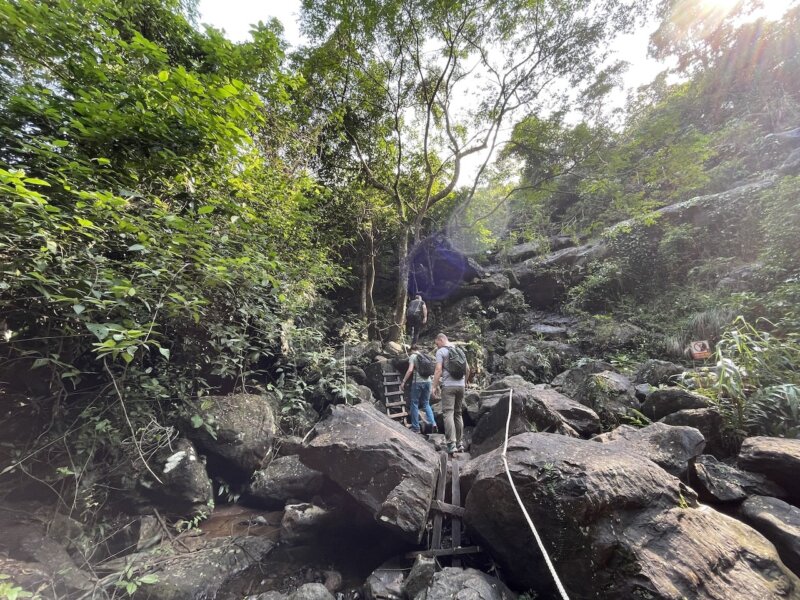
Amazing trek
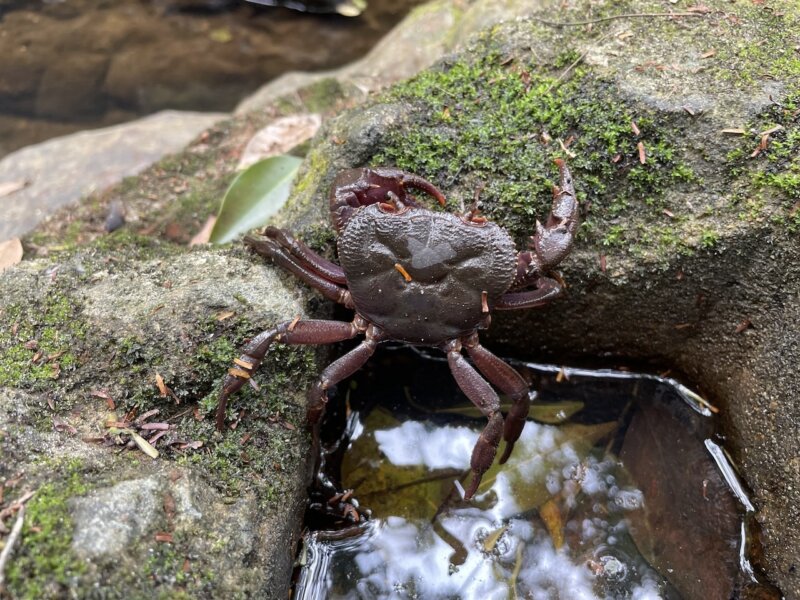
A crab found nearby the waterfall
A small bug
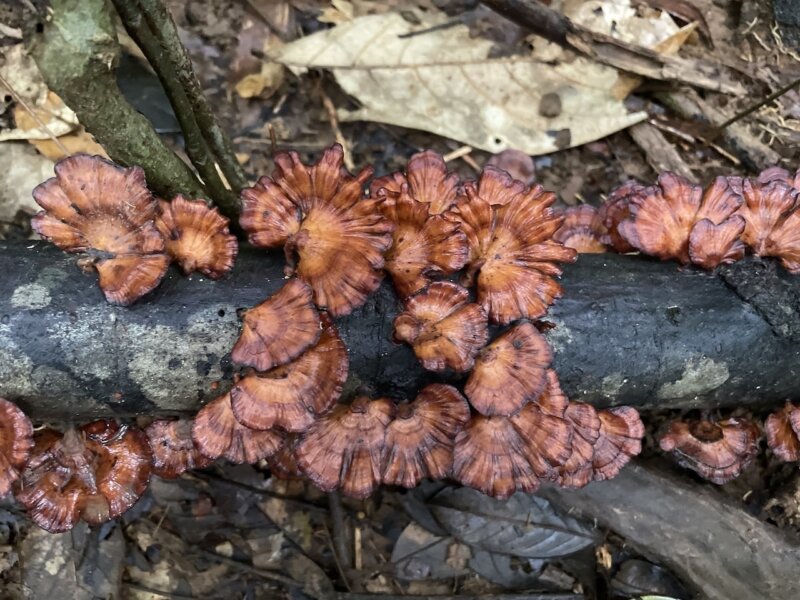
Fungi in Botanic Garden
A little lizard
Spring in Botanic garden
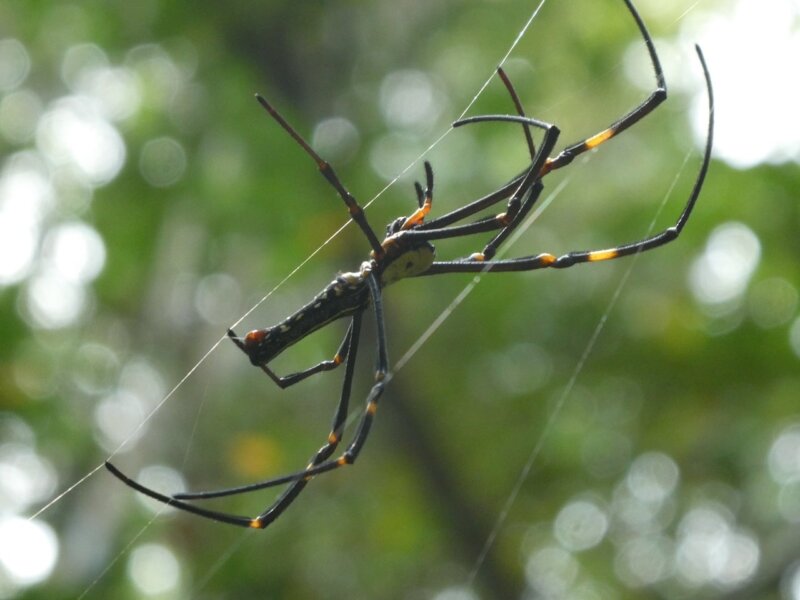
A spider found along the way
Gió waterfall
There are some cautions, though:
The best time to visit Botanic garden is anytime that isn’t rainy season. The rainy season in Phong Nha is between late September and November. There are sunny dry days during this period, so please be flexible with your schedule though.
At the last part of route 2 and route 3, there is steep decent rocky path. There is a rope to assist you but please make sure that you are fit enough to keep your body balanced. Otherwise, the trails can be really slippery and dangerous. If you are really burned out, have a break, take a deep breath and slow down your heart beats. It helps.
If you visit Botanic garden in summer time, consider to bring along the swimsuit. Gio waterfall is a place for a rewarding swim after a long sweaty trek. However, there is no changing room at the waterfall.
What to bring: Insect repellent. DON’T forget it. There are mosquitos that can leave you bites and itches (I’m sure it’s not fun).
Small tips: Vietnamese people usually use lemongrass essential oil or tea tree oil to repel mosquitos and insects. Some chemical repellents may have a sweet scent, which keeps mosquitoes away but can unintentionally attract other bugs.
7. The Commander cave: A journey into the quiet heart of history
While many caves in Phong Nha are famous for their geological wonders, Commander Cave (also known as NH General Storage) offers a rare look at the human spirit.
A hidden legacy
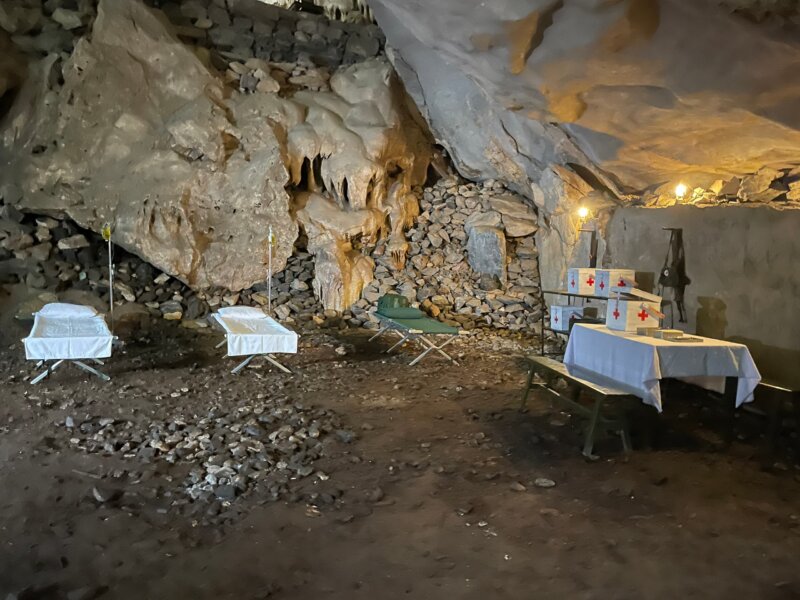
During the Vietnam War, this cave was a vital, secret hub—serving as a strategic command station, a medical clinic, and a primary supply store. Its location remained a mystery long after the peace treaties were signed. It was only rediscovered years later when local villagers explored the area in search of remnant metal.
Unlike the large-scale guided tours, you can experience Commander Cave independently.
Self-Guided Exploration: Clear instruction signs lead you through the cave’s historical chambers, allowing you to absorb the atmosphere at your own speed.
The Path of Reflection: After visiting the cave, you can return directly to the ticket counter or take the 2km hiking path. We highly recommend the hike; it is a beautiful way to immerse yourself in nature while reflecting on the peace we are fortunate to breathe today.
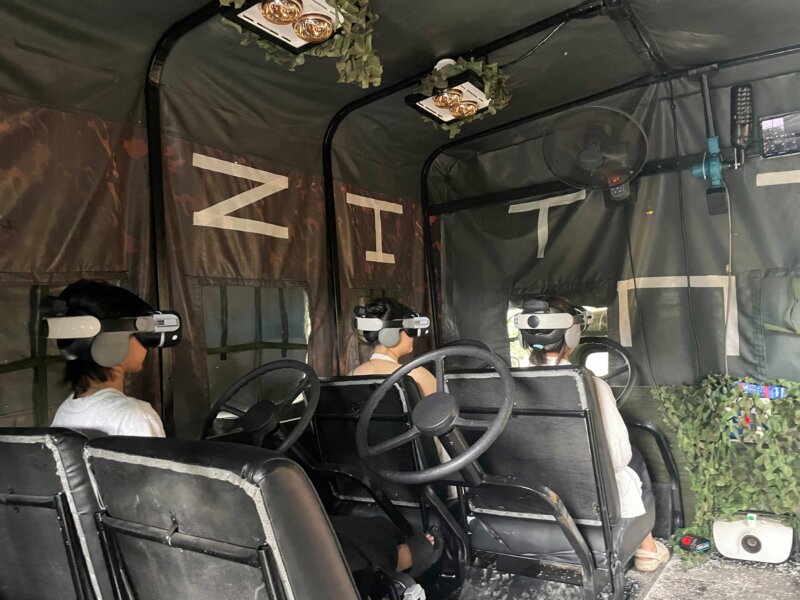
VR 360 tour: Role-play a truck driver to relive the war moments on Ho Chi Minh trails by experiencing the VR360 technology on tri-axle ZIL trucks.
Tickets: Available at the entrance.
Ticket type
Standard
Discounted
Weekday (Mon-Thu)
250,000VND
220,000VND
Weekend (Fri-Sun)
300,000VND
270,000VND
Discounted price is applicable to Vietnamese citizens only who are students, Quang Tri residents, senior citizens, war invalids and wounded soldiers, veterans, active-duty soldiers, and people with meritorious services to the Revolution.
VR Experience
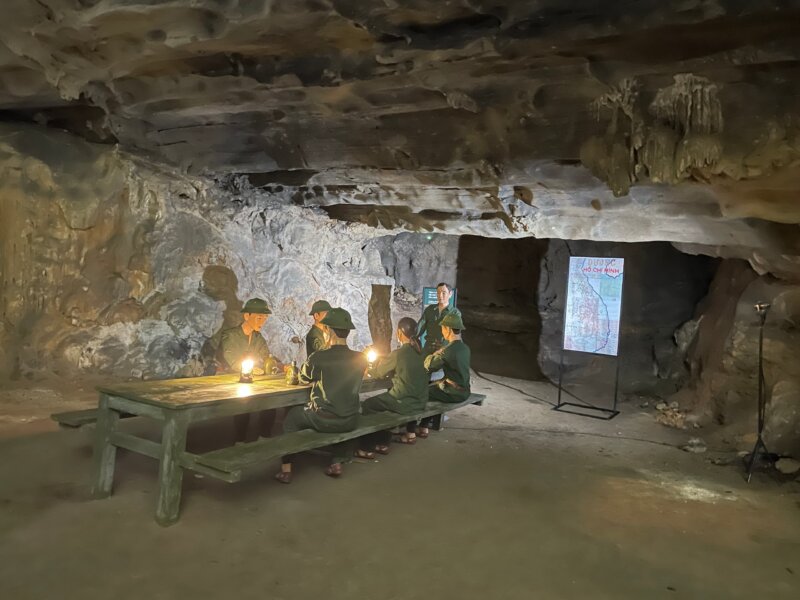
Meeting room
Filed Hospital
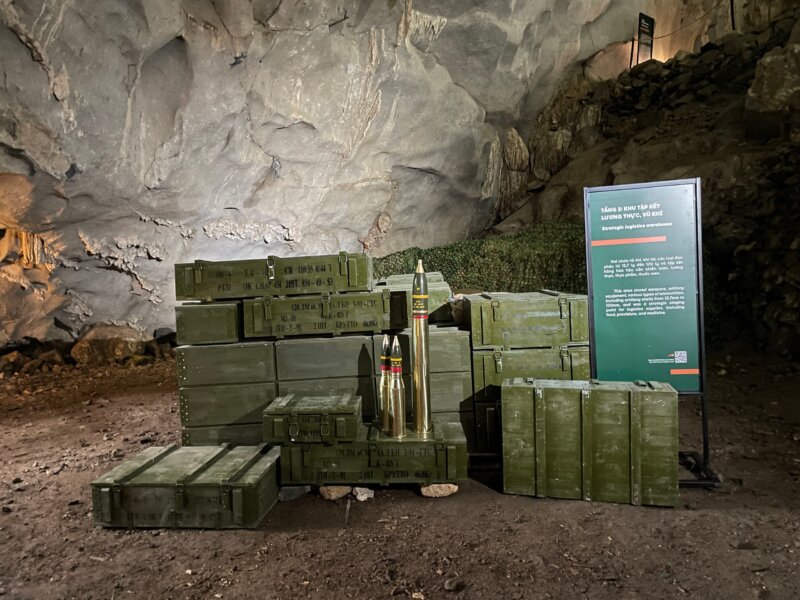
Ammunation storage
Travel tips:
Footwear: Wear sturdy shoes for the hiking trail.
The 1.2km Route K (Camouflage Route) features clear instructional signs and two historical stops: the Victory Road 20 Construction Tools and the Strategic Logistics exhibitions. If it’s raining, you can opt to take an electric buggy.
8. Additional tips for self-exploration in Phong Nha
It is advised to wear comfortable clothes and footwear suitable for walking and climbing stairs.
People in Vietnam generally and in Phong Nha particularly are very friendly. Don’t forget to say “Xin chào” or wave your hands when seeing them as a greeting etiquette.
Carry a small backpack with essentials such as water, snacks, sun hat, sunscreen, and insect repellents.
Follow the instructions of your tour guide and respect the cave’s rules and regulations to preserve its natural beauty: Don’t touch the stalagmites and stalactites in the caves.
Consider visiting Phong Nha Cave during the dry season (from April to August) when water levels are lower, allowing for better exploration. If you reach Phong Nha in later September and October, please keep your schedule open in case some tourist attractions close due to the high level of water. Except for the rainy days or even stormy days, the weather is super nice with bright sunlight, moderate temperature and pleasant breezes.
Exploring Phong Nha without a guided tour gives you the freedom to step off the beaten path, connect with locals, and experience the raw beauty of the Cave Kingdom on your own terms. Whether you love swimming in the Botanic Garden, riding to the Duck Stop, or reflecting on history inside Commander Cave, an unforgettable journey is waiting for you.
Pack your bags, grab your sun screen, and embrace the magic of self-guided travel!
Expand Your Journey: Recommended Reading
Don’t stop exploring just yet! To help you plan the perfect, smooth itinerary through Central Vietnam, check out our other human-verified travel guides:
How to travel from Dong Hoi to Phong Nha by local bus: Skip the expensive private transfers, travel like a pro. Learn the exact timetables, bus stop locations, and insider tricks to navigate the local public transit like a pro.
Need a hand smoothing out your travel plans? At Endless Vietnam, we specialize in itinerary rearrangement and optimization to make sure your journey through our beautiful country is seamless, sustainable, and deeply connected to local life. Drop us a message on our Contact Page—we’d love to collaborate on your next big adventure!
VIETNAM CURRENCY – GET FAMILIRIZED AND TIPS FOR THE FIRST-TIME TRAVELERS
The currency in Vietnam is the Vietnamese Đồng, of which symbol is ₫ while the code is VND. Its name comes from the Vietnamese word for “copper.”
In addition, Vietnam Dong has been called with different names such as: the strangest currency or funny money. Why is that? Let’s learn more about Vietnam Dong with Endless Vietnam.
1. VIETNAM CURRENCY: GET USED TO VIETNAM DONG (VND)
The first and foremost thing to learn about Vietnam Dong is its value. Most of visitors are so surprised to find that Vietnamese people are spending “million dongs” as if they were millionaires. In contrast with the overwhelm, the sad fact is that the Vietnamese đồng is the second-lowest-valued currency in the world (just behind Iranian Rial).
With that said, having a million Vietnamese dong does not make you wealthy.
To get an idea of typical exchange rates for Vietnam money, refer the approximate rates in June 2024 for the đồng with popular currency pairings.
For the updated conversion rates, use an online currency converter or check your preferred money transfer app. We recommend you use the Vietcom Bank for checking the exchange rates.
American dollar (1 USD) = VND26,398
British pound ≈ VND31,423
Euro ≈ VND29,810
Australian dollar ≈ VND19,140
Japanese yen ≈ VND169.9
Imagine you are booking a day tour with the price at US$50, you will have to pay 1.319.900₫ (Yes, one million three hundred and two thousand five hundred đồng); and you are becoming a millionaire when travelling in Vietnam.
TIP: If you’re confused by too many zeros in the number, simply remove the last three zero. To quickly convert from VND to USD, just remove three zeros and divide by 26.
2. VIETNAM CURRENCY: GET USED TO THE BANKNOTES
Vietnam Dong is issued in banknotes ranging from 500VND to 500,000VND by State bank of Vietnam.
In general, Vietnamese dong banknotes come in two groups, based on their materials, which are cotton paper and polymer. While the colors vary by the denomination, all Vietnamese bills have a portrait of Ho Chi Minh on the front side.
If you find it difficult to distinguish between the banknotes, take a look at the backside. Here, you’ll see the different national symbols, which helps you to identify the value of the banknotes.
Let’s look into each banknote to get familiarized with them.
2.1. Cotton group
Notes in the cotton group are of low value. You actually can’t buy a lot with cotton notes, even for tipping for your service providers.
500 VND: Dark red cotton paper banknotes with an image of ships on the back.
500VND back
500VND front
1,000 VND: Purple cotton paper notes with an image of a timbering operation on the back.
1000vnd back
1000vnd Front
2,000 VND: Dark brown cotton paper bills with an image of a weaving workshop on the back.
2000VND Back
2000VND Front
5,000 VND: Dark blue cotton paper material with an image of Tri An Hydropower Plant on the back.
5000VND Back
5000VND Front
There are 100VND and 200VND notes but their values are so small that we have rarely seen them in the market.
2.2. Polymer group
10,000 VND: Dark brown and green polymer material with an image of oil rigs on the back.
10,000VND Front
10,000VND Back
20,000 VND: Dark blue polymer material with an image of the Pagoda Bridge on the back.
20,000VND Front
20,000VND Back
50,000 VND: Red and purplish-brown polymer material with an image of Nha Rong Port on the back.
50,000VND Front
50,000VND Back
100,000 VND: Dark green polymer banknotes with an image of the Temple of Literature on the back.
100,000VND Front
100,000VND Back
200,000 VND: Brownish-red polymer banknotes with an image of Ha Long Bay on the back.
200,000VND Front
200,000VND Back
500,000 VND: Blue and purple polymer banknotes with an image of Ho Chin Minh’s home in Kim Lien (Nghe An province) on the back.
500,000VND Back
500,000VND Front
NOTE: We used to have coins but it was so inconvenient that we stopped using them in 2011.
TIP: The 20,000 VND bill and the 500,000 VND bill come in similar shades of blue — double check before you pay.
3. USEFUL TIPS FOR PAYMENT AND EXCHANGING CURRENCY IN VIETNAM
1. When traveling to Vietnam, it is essential to familiarize yourself with the local currency, which is the Vietnamese Dong (VND). We would recommend you change some cash from home so that you can get used to the banknotes before your arrival in Vietnam.
2. In order to exchange your foreign currency for Vietnamese Dong, you can visit authorized exchange counters at airports, banks, hotels, or currency exchange offices. It is advisable to compare rates and fees before making an exchange.
4. When making purchases in Vietnam, it is recommended to use smaller denominations of VND as some businesses may not have enough change for larger notes.
5. Credit and debit cards are accepted at most hotels, restaurants, and larger establishments in major citiesbut you have to pay a surcharge of 3% or 4%. However, it is always wise to bring with you some cash for smaller vendors and markets that may only accept cash, especially when you are in the rural/ remote areas.
6. Be cautious when handling Vietnamese Dong, as counterfeit currency is a common issue in Vietnam. It is advisable to only exchange money at reputable locations and to inspect bills for security features such as watermarks and holograms.
7. ATMs are widely available in Vietnam, especially in urban areas, and dispense cash in Vietnamese Dong. However, be aware that some ATMs may charge a service fee for foreign card transactions. In this case, choose to be charged in Vietnam currency to avoid paying more than you need to.
8. When leaving Vietnam, it is advisable to exchange any remaining Vietnamese Dong back into your home currency before departing, as it may be difficult to exchange once outside of the country. Or, you can keep a few small banknotes as souvenirs.
By searching information for this article, I’ve found that WISE is offering a solution for travelers with a travel money card. Please check it out if it is the right for you.
To sum up, there are some notes for you to remember about the Vietnamese currency:
– The banknotes are issued in cotton paper and polymer. All have the portrait of Ho Chi Minh in front and another national symbol in the back side.
– There are no coins used in Vietnam.
– To quickly convert from VND to USD, just remove three zeros and divide by 26.
– Double check before you pay 20,000VND and 500,000VND banknotes.
– Remember to withdraw cash before you go to rural/ remote areas.
By following these instructions, you can ensure a smooth and hassle-free experience when using Vietnam currency during your travels in Endless Vietnam.
Traveling in Vietnam is becoming easier and more affordable, thanks to widespread Wi-Fi coverage. You can find it in airports, hotels, cafes, and restaurants. But what if you need to use Google Maps to find an address, book a Grab from a dodgy bus or train station, or even make an emergency phone call?
An eSIM is the answer.
An eSIM (embedded SIM) is a small, programmable chip embedded directly into your phone. It performs the same function as a traditional SIM but cannot be removed physically.
A SIM card, traditionally a small plastic card that slots into your mobile phone, stands for ‘subscriber identity module’.
1. Why should you use eSIM when traveling to Vietnam?
Using an eSIM when you travel abroad can save you from some unpleasant surprises. You won’t have to deal with exorbitant roaming charges after your trip. Plus, you won’t need to rely solely on Wi-Fi, hopping from one hotspot to another.
If you buy a traditional SIM card in Vietnam, you must register it with your passport. While this process is quick, it can still be a hassle. An eSIM can help you avoid these inconveniences with the following advantages:
1.1. Immediate activation
Did you know you can activate your eSIM online right when you buy it? No waiting for a SIM to be delivered by mail! Since eSIM is virtual, you don’t have to insert anything physically into your phone. Just follow the detailed instructions from your provider to install it.
Keeping your current physical SIM card in your phone also reduces the risk of losing it.
1.2. Easy network switching
Unlike a physical SIM, which is tied to a specific carrier, an eSIM is carrier-independent. This means you can switch to the local network that provides the best coverage for your area. In Vietnam, for example, your eSIM can connect with VIETTEL, MOBIFONE, or VNPT, the top mobile carriers in the country. You can easily switch your eSIM to one of these providers while traveling.
Mobile network operators in Vietnam
1.3. Reduce your carbon footprint
Another reason to love eSIM is its environmental benefits. Traditional plastic SIM cards consume a lot of resources, including PVC, silicon, and even gold, making them hard to recycle. In contrast, eSIMs allow for digitally loading SIM data anywhere in the world.
As the climate crisis accelerates, eSIMs play a crucial role in protecting our environment.
2. Disadvantages of eSIM
While eSIMs offer many benefits, there are still some drawbacks to consider.
2.1. Not all smartphones have an eSIM
Only the latest smartphones, tablets, and wearables support eSIM. Many older devices do not, which can limit your options if you’re using outdated technology.
2.2. More difficult to install and activate
With a traditional SIM card, you simply insert it into your phone, and it works. However, installing and activating an eSIM can take a bit more time and effort. If your eSIM-compatible device becomes inoperable, you may face challenges accessing or transferring the eSIM. This could leave you without service until the issue is resolved.
Additionally, you need a stable internet connection to install and activate an eSIM.
However, the benefits of using eSIM still outweigh the downsides, especially when traveling. If you frequently travel or switch carriers, an eSIM is a smart choice. It offers flexibility, convenience, and security. An eSIM provides seamless roaming with digital carrier switching and flexible, pay-as-you-go pricing options.
3. How to use an eSIM for your Vietnam trip
Now that you’re excited about eSIM, let’s go through the steps to get you set up for your Vietnam adventure.
3.1. Make sure your phone/devices are compatible with eSIM
Check if your device is eSIM compatible. Here are some popular options:
Apple iPhones: iPhone XR, iPhone XS, iPhone 11, iPhone 12, iPhone 13, iPhone SE (2nd generation), and iPhone 14 and later
One of the best things about eSIM is that you can buy a plan and set it up from home. Then, activate it when you arrive in Vietnam. After purchasing a plan, the eSIM provider will send you detailed instructions.
Once you pay for the plan, you’ll receive a booking confirmation with a QR code. Depending on your phone model (iOS, Google, or Samsung) and your eSIM provider, you will receive thorough instructions.
Note that installation is not the same as activation. Installing your eSIM in advance will not start the expiry of the plan. You need to activate the eSIM before your flight or upon arrival. Your phone will automatically connect to the local network, and the plan expiry will begin.
Manual activation may be required based on your provider.
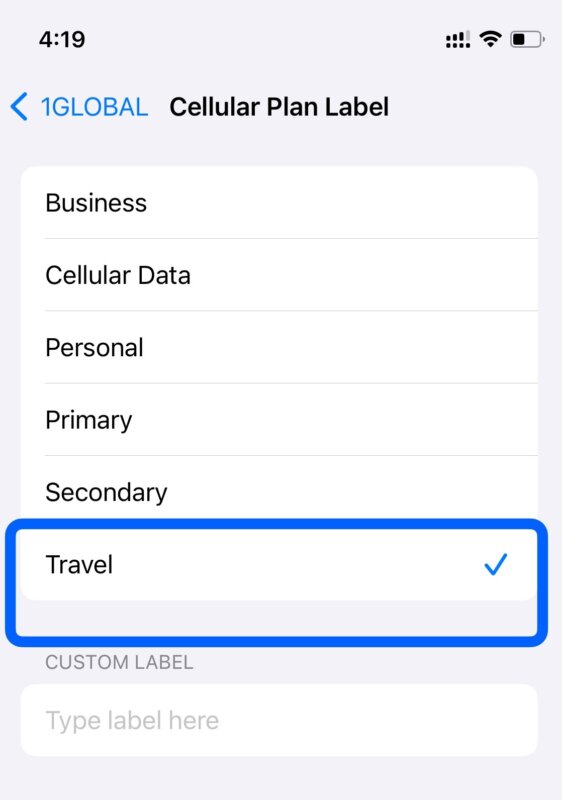
Choose the label
Make sure that Data Roaming is turned on for the use of your eSIM.
Check if your purchased eSIM requires manual activation. If it does, I recommend activating it just before you fly while still connected to your home network, as internet connectivity is essential for activation.
If you don’t see the button to manually activate your eSIM, it will automatically activate when you arrive at your destination and connect to the network.
3.4. Get connected
When you arrive in Vietnam, go to your phone’s settings and turn on the eSIM. Don’t forget to ensure that Data Roaming is enabled for your eSIM to function properly.
If you still use a physical SIM card for your domestic phone line, switch off the service for your primary line to avoid roaming charges.
The final thoughts
While installing and activating an eSIM may take a little effort, it’s well worth it. Even if you’re not tech-savvy, you can easily install and activate the eSIM with the detailed instructions and excellent customer service from the providers.
Using an eSIM is not just about its reasonable price and convenience; it’s also a green solution for our global sustainability.
 0

 Central Highlands
 Central Vietnam
 Con Dao Archipelago